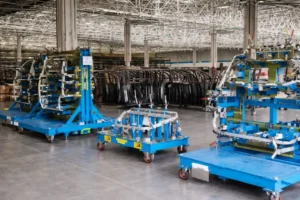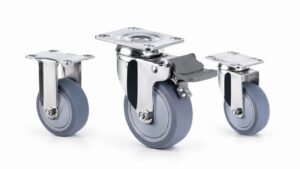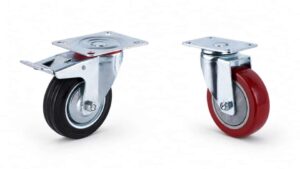

Moving heavy machinery presents a huge risk of instability and accidents. This can damage expensive equipment and jeopardize worker safety. Choosing the right heavy-duty casters is your best defense.
The key to stability is a combination of caster type, material, and design. Use a mix of two rigid and two swivel casters. Select polyurethane wheels for floor protection and steel or cast iron for maximum loads. Ensure they have robust bearings and a kingpinless swivel design1.
Choosing the right caster seems simple, but getting it wrong can be a costly mistake that impacts safety and efficiency. After 12 years in this business, I've seen it all. A small error in caster selection can lead to big problems down the line. But don't worry, I'm here to walk you through everything you need to know. Let's break down the details to make sure you get it right the first time.
What Are Heavy-Duty Casters?
Using standard casters for massive loads is a recipe for disaster. They can buckle or break, causing catastrophic equipment failure and costly downtime. Heavy-duty casters are engineered to prevent this.
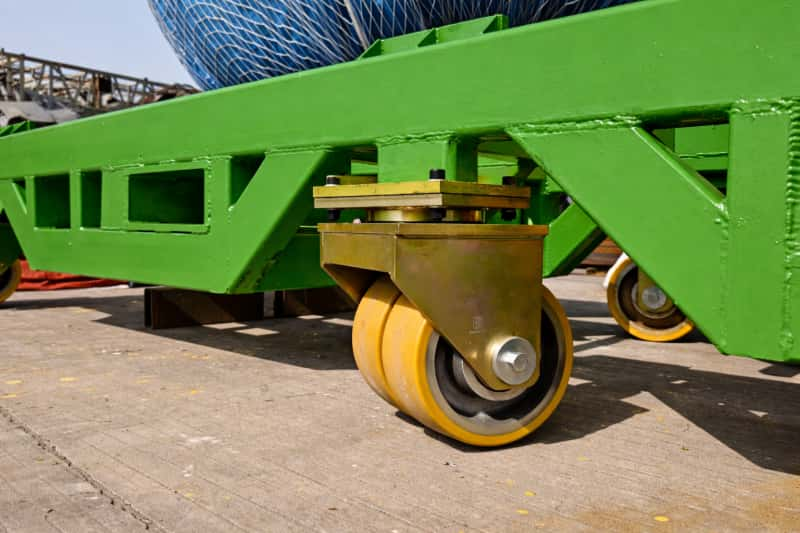
Heavy-duty casters are specifically designed for high load capacities, often exceeding 1,000 pounds each. They feature durable materials like forged steel or cast iron, thicker forks, and robust mounting plates to safely and reliably move immense weights in demanding industrial environments.
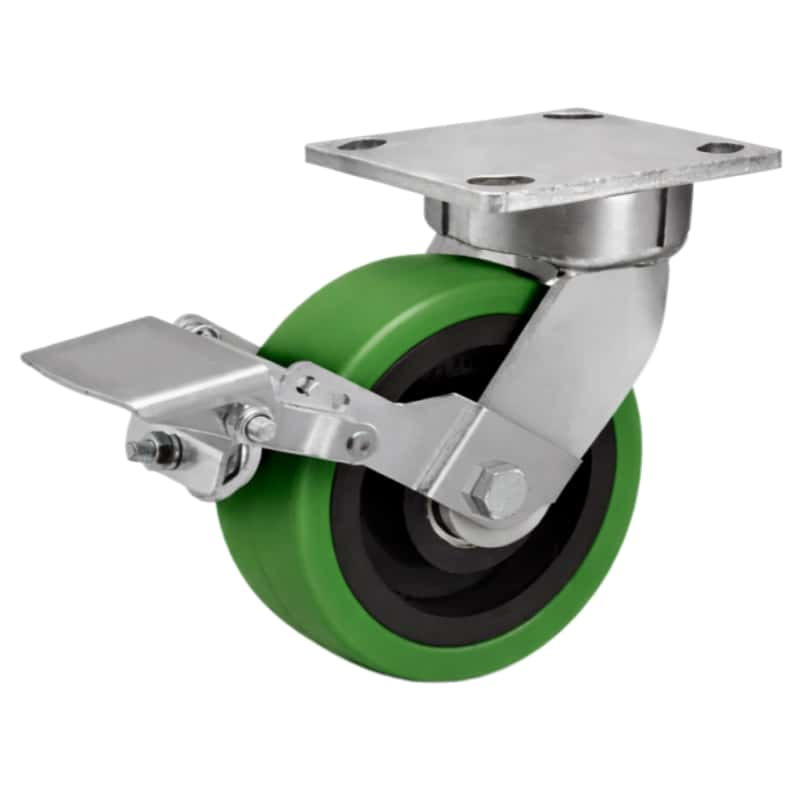
When we talk about heavy-duty, we're not just talking about a slightly stronger caster. These are in a different league. Standard casters might handle a few hundred pounds, but heavy-duty models are built to support thousands, with some super heavy-duty types handling over 20,000 pounds per caster. This strength comes from their construction. They use thicker, often forged, steel for the forks and top plates. The welding is more substantial to withstand constant stress.
A critical feature in top-tier heavy-duty casters is the kingpinless swivel design. Traditional casters use a kingpin (a bolt and nut) to hold the swivel section2 together. This is a major failure point under heavy loads or shock. A kingpinless design uses a single row of ball bearings in a hardened raceway, which distributes the load and impact forces more effectively. This eliminates the risk of kingpin failure and provides a much smoother, more durable swivel action, which is essential for harsh industrial work.
| Feature | Standard Caster | Heavy-Duty Caster |
|---|---|---|
| Load Capacity | 100 - 500 lbs | 1,000 - 20,000+ lbs |
| Fork Material | Stamped Steel | Forged or Heavy Gauge Steel |
| Wheel Material | Rubber, Light Plastic | Polyurethane, Steel, Cast Iron, MC Nylon |
| Swivel Design | Kingpin | Often Kingpinless |
| Common Use | Office chairs, light carts | Industrial machinery, assembly lines |
What Are the 5 Key Factors for Choosing Heavy-Duty Casters?
Choosing the wrong caster for your heavy equipment is a common and costly mistake. It can lead to poor maneuverability, damaged floors, and serious safety hazards. Focusing on five key factors ensures success.
The five essential factors are: calculating the correct load capacity with a safety margin3, selecting the right wheel material for your floor, choosing an appropriate wheel diameter, picking the best bearing type for rolling efficiency, and considering the swivel section's durability.
Over my years of exporting casters, I've developed a simple process to guide our customers. Getting these five things right is 90% of the battle.
1. Load Capacity
First, calculate the required capacity per caster. Take the total weight of your equipment plus its maximum load. Then, add a safety margin. A good rule of thumb is to add 33% to the total weight. Finally, divide that number by the number of casters you plan to use. This buffer accounts for uneven floors and shock loading. Formula: `(Equipment Weight + Max Load) 1.33 / Number of Casters`*
2. Wheel Material
The material is a trade-off between floor protection, rolling ease, and durability. Polyurethane is a great all-around choice for protecting floors and quiet operation. For extreme loads or high-wear situations, steel, MC nylon, or cast iron are superior.
3. Wheel Diameter and Width
A larger wheel diameter (150mm or more) makes it easier to push heavy loads and roll over obstacles. However, a bigger wheel raises the cart's height, which can make it unstable or difficult to handle. Harder wheels also reduce rolling resistance. A wider tread increases load capacity but can also increase the force needed to turn. For example, casters rated for over 5 tons often have a 75mm tread width or use dual 50mm wheels because a single 50mm wheel just can't handle that pressure.
4. Bearing Type
For heavy and frequently moved equipment, precision ball bearings are the best choice. They offer the lowest friction and smoothest roll, making a huge difference in the manual effort required.
5. Swivel Section
As I mentioned, for the toughest jobs, a kingpinless swivel section is non-negotiable. It provides far greater durability and strength by distributing impact forces across a larger surface area.
What Types of Heavy-Duty Casters Meet Various Equipment Needs?
Not all heavy equipment moves in the same way or for the same purpose. Using a single type of caster for every application limits functionality and can compromise stability. Different caster types offer specialized solutions.
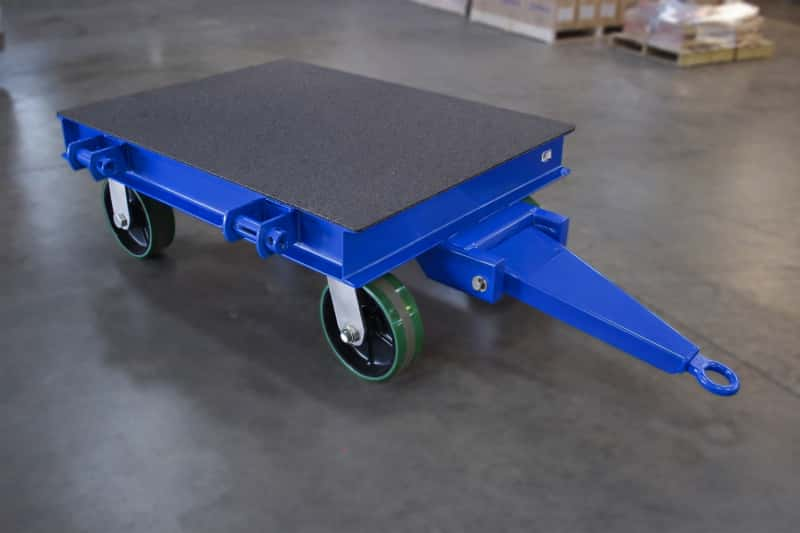
The main types are rigid casters for straight-line stability and swivel casters for 360-degree maneuverability. For most heavy machinery, the best setup is a hybrid configuration of two rigid and two swivel casters, which balances directional control with turning flexibility.

The configuration of the casters on your equipment is just as important as the casters themselves. We almost always recommend a combination to our clients, as it provides the best of both worlds.
Rigid (Fixed) Casters
I always recommend rigid casters when the primary need is moving heavy machinery in a straight line over long distances. They are bolted in a fixed position, which prevents the cart from veering off course. This ensures excellent directional stability and control.
Swivel Casters
Swivel casters are the solution for agility. They rotate a full 360 degrees, allowing you to navigate around obstacles and maneuver equipment in tight, compact spaces. However, using four swivel casters on a very heavy cart can make it difficult to control, almost like trying to push a shopping cart with four wobbly wheels. That's why they are almost always paired with rigid casters.
Braking Systems
Many heavy-duty casters come with brakes. It's crucial to understand their purpose. A caster brake is designed to lock the wheel or swivel in place to keep the equipment stationary. It is not designed to slow down a moving heavy load. Attempting to use it as a brake for a moving object is dangerous and can lead to brake failure or accidents.
| Configuration | Best For | Pros | Cons |
|---|---|---|---|
| 4 Swivel Casters | Maximum maneuverability | Can turn and move in any direction. | Hard to control in a straight line. |
| 4 Rigid Casters | Straight line movement only | Excellent stability and control. | Cannot turn or maneuver. |
| 2 Swivel, 2 Rigid | General purpose | Good balance of control and agility. | Turning radius is wider than 4 swivels. |
How Do You Select Casters for Different Work Environments?
Your work environment can quickly destroy the wrong type of caster. Abrasive floors, extreme temperatures, or chemicals can cause premature failure, leading to frequent replacements and operational delays.
To ensure longevity, match your caster's features to its environment. Use shock-absorbing casters4 for uneven floors, stainless steel casters for wet or chemical areas, and high-temperature wheels for hot environments like food processing ovens.
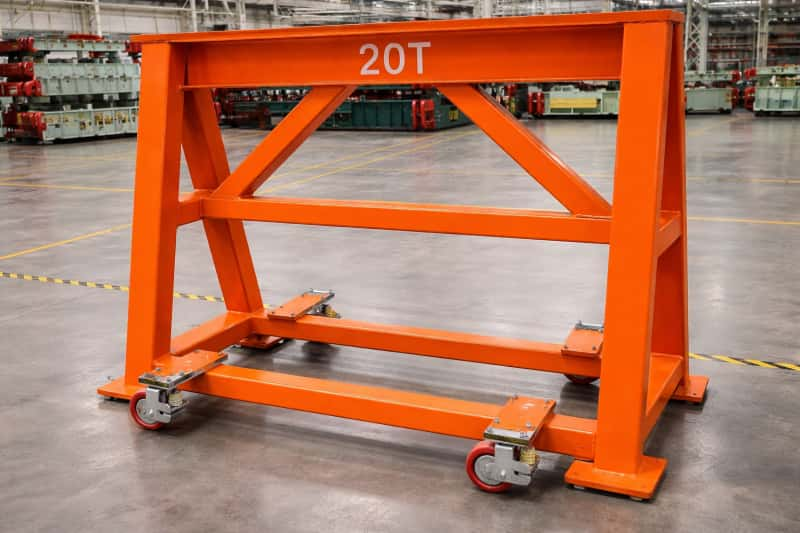
The environment is a silent killer of casters. We work with clients in diverse industries, from automotive manufacturing to food processing, and each has unique challenges. Matching the caster to the specific conditions is critical for performance and safety.
Uneven Surfaces and Shock Absorption
If your factory floor has cracks, bumps, or thresholds, standard casters will transfer every jolt to the equipment and its load. This is where spring-loaded, shock-absorbing casters are invaluable. The spring mechanism cushions the impact, reducing vibration and noise while protecting both the caster and the delicate equipment being transported. We see these used extensively on parts carts in the automotive industry to protect sensitive components.
Extreme Temperatures or Chemicals
Standard casters are not built for extreme heat or corrosive substances. For applications like food processing ovens or autoclaves, we supply high-temperature casters made from materials like glass-filled nylon or phenolic resin. In wet or chemical-heavy environments, such as food plants or labs, casters made from stainless steel (Grade 304) are essential to prevent rust and corrosion. This also ensures compliance with standards like FDA and EN 840.
Floor Conditions
The caster wheel should be compatible with your floor. Hard wheels like steel or cast iron offer the lowest rolling resistance on smooth concrete but can damage more delicate floor surfaces like epoxy or tile. For floor protection, a softer polyurethane tread is the best choice. It provides a cushioned ride, runs quietly, and won't leave marks.
| Environment | Primary Challenge | Recommended Solution |
|---|---|---|
| Uneven Floors | Shock, Vibration, Noise | Shock-absorbing spring-loaded casters |
| High Heat | Material Degradation | High-temperature wheels (Phenolic, Steel) |
| Wet / Chemical | Rust, Corrosion | Stainless steel casters and hardware |
| Delicate Floors | Damage, Marks | Polyurethane or soft rubber tread wheels |
Conclusion
Choosing the right heavy-duty caster by matching load, materials, and features to your specific needs ensures your machinery moves with stability. This is the foundation for safe and efficient operations.
The kingpinless swivel design enhances durability and reduces failure risk, making it ideal for heavy loads and harsh industrial environments. ↩
A durable swivel section ensures smooth maneuverability and reduces the risk of caster failure under heavy loads. ↩
A safety margin accounts for uneven floors and shock loading, ensuring casters can handle unexpected stress safely. ↩
Shock-absorbing casters reduce vibration and noise, protecting sensitive equipment and improving transport stability. ↩