
Choosing the wrong caster can damage floors or fail under heavy loads. This mistake costs you money and time, disrupting your entire project. Let me help you avoid this.
Rubber casters are affordable and excel at shock absorption, making them perfect for rough surfaces and quiet operation.1 Polyurethane (PU) casters offer a higher load capacity, superior durability, and better chemical resistance, ideal for demanding industrial environments and protecting smooth floors.2
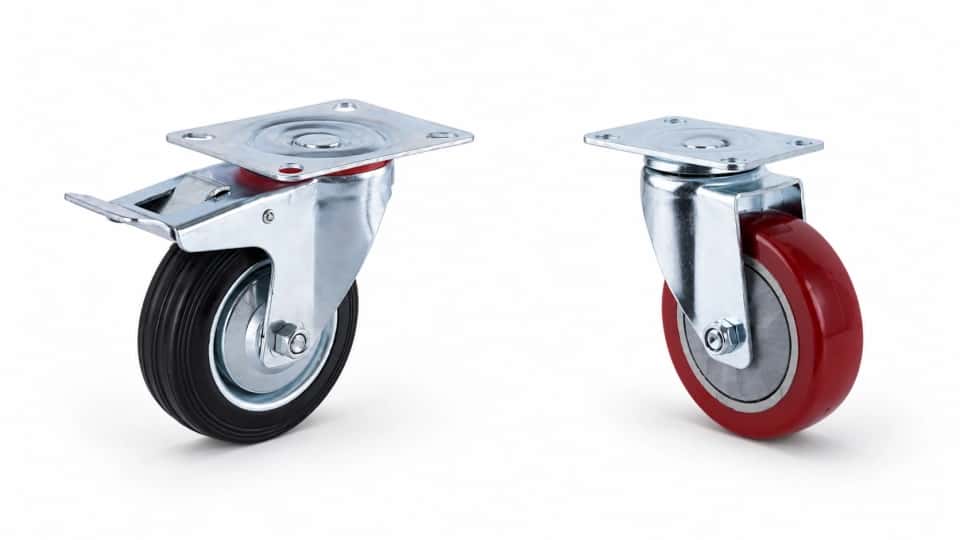
Making the right choice between rubber and polyurethane isn't just about picking a wheel; it's about matching the caster's performance to your specific job. Over my 12 years in this business, I've seen how this single decision can define the success and efficiency of an operation. A client might save money upfront with one type, only to face higher replacement costs later. Another might overspend on features they don't need. Let's break down the key differences so you can get it right the first time.
Which Caster Rolls More Easily?
Struggling to push heavy equipment? The wheel's material is often the problem, making your work harder than it needs to be. Let me explain which one makes movement easier.
Polyurethane casters have lower rolling resistance than rubber casters.3 This means they require less force to start moving and to keep rolling, especially on smooth floors with heavy loads.

When we talk about rolling resistance, we're really talking about how much effort it takes to push a cart. The hardness of the wheel material is the most important factor here. Polyurethane is a harder material than rubber. We measure this on a Shore A hardness scale. Most of our PU wheels are between 90 to 95A, while our standard rubber wheels are around 85 to 90A.
This difference in hardness matters a lot.
- Less Deformation: A harder PU wheel doesn't flatten or "squash" as much under a heavy load. Less deformation means less energy is wasted, making the wheel roll more efficiently.
- Easier Push: Because less energy is lost, you need less force to get the cart moving and to keep it going. For your team, this means less physical strain and more productivity, especially in a large warehouse where carts are moved all day.
However, on very rough outdoor ground, the softness of a rubber wheel can sometimes help it "absorb" small pebbles and cracks, which can feel smoother. But for most industrial applications on concrete floors, polyurethane is the clear winner for ease of movement.
Which Caster Is Better for Your Floor Type?
Are you worried about marking up your clean indoor floors? Or do you need something that can handle a rough outdoor path? The wrong caster can cause real damage.
Use polyurethane casters for smooth, indoor surfaces to avoid marks and protect floors. For rough, uneven, or outdoor ground, the shock-absorbing quality of rubber casters makes them the superior choice.
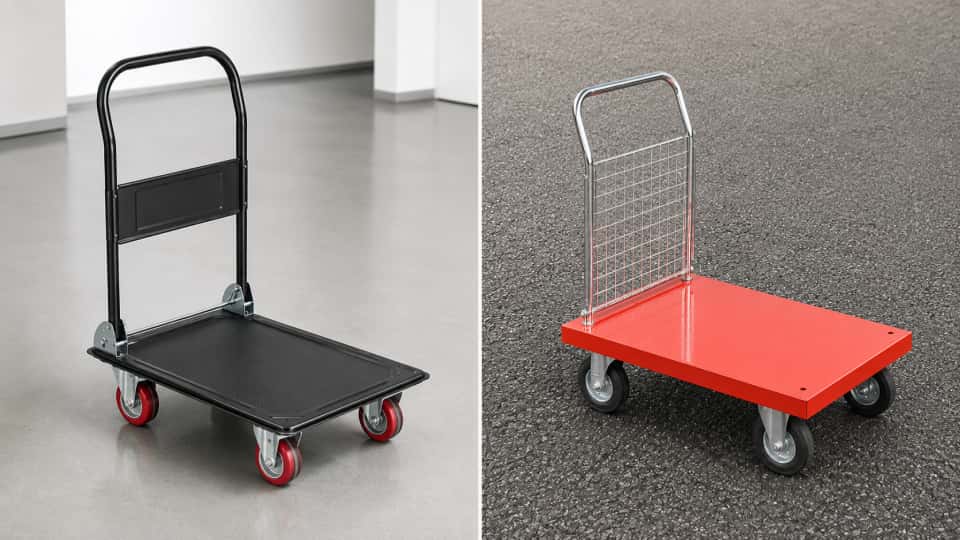
The floor surface is one of the first things I ask a new client about. It determines so much. Let's break it down.
For Indoor & Smooth Surfaces
Polyurethane is the champion for indoor environments. It is a non-marking material, meaning it won't leave black streaks on your nice epoxy, tile, or vinyl flooring. This is why you see them in hospitals, retail stores, and modern manufacturing facilities. Because PU wheels are available in many colors, they also offer a better look.
For Outdoor & Rough Surfaces
Rubber is the go-to material for the outdoors. Its natural softness and elasticity allow it to roll over cracks, gravel, and other imperfections without a problem. It acts like a small tire. However, you must be careful with the type of rubber.
- Standard Black Rubber: This is the most common and affordable type. It gets its black color and durability from carbon black, an additive used in the formula. The downside is that this carbon black will leave marks on floors.4
- Non-Marking Gray Rubber: We also produce a gray rubber wheel that doesn't contain carbon black. It's great for indoor use on less-than-perfect floors, but it uses a higher percentage of natural rubber, making it more expensive.
Need a Smoother, More Cushioned Ride?
Are your carts rattling and shaking? This can damage fragile contents and create a loud, distracting workplace. There's a simple material choice that solves this problem.
Rubber casters offer far better shock absorption than polyurethane casters. Their natural elasticity absorbs vibrations and bumps, providing a cushioned and quieter ride for the load and the operator.
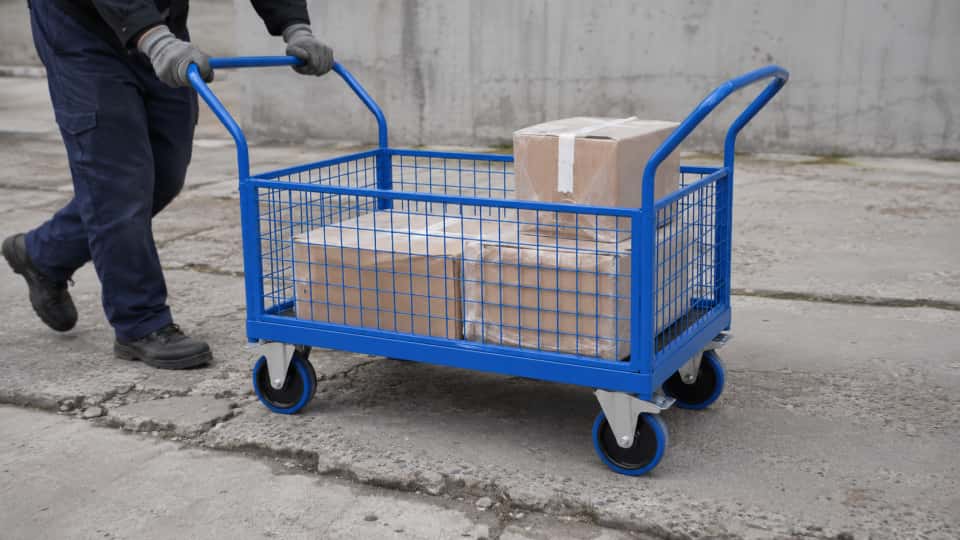
If you are moving anything fragile, rubber is your best friend. Think of it as a suspension system for your cart. The material's natural elasticity allows it to flex and absorb energy from bumps, cracks, and uneven surfaces. This protects the items on the cart from damage. I remember a client who manufactured sensitive medical instruments. Their carts used hard plastic wheels, and they were experiencing high rates of damage during in-plant transport. We switched them to a high-grade rubber caster, and their damage claims dropped to almost zero.
Polyurethane, being a harder material, provides very little cushioning. It will transfer most of the shock and vibration from the floor directly to the cart and its contents. While this is not an issue for moving robust items like steel parts, it's a major problem for anything delicate. The trade-off for PU's high load capacity and low rolling resistance is a much bumpier and harsher ride.
Which Caster Can Carry Heavier Loads?
Overloading your casters is a recipe for disaster. Wheel failure can lead to accidents, damaged goods, and costly downtime. You need a caster that can handle the weight.
Polyurethane casters have a significantly higher load capacity than rubber casters of the same size. Their harder, more durable material allows them to support heavier weights without deforming or failing.
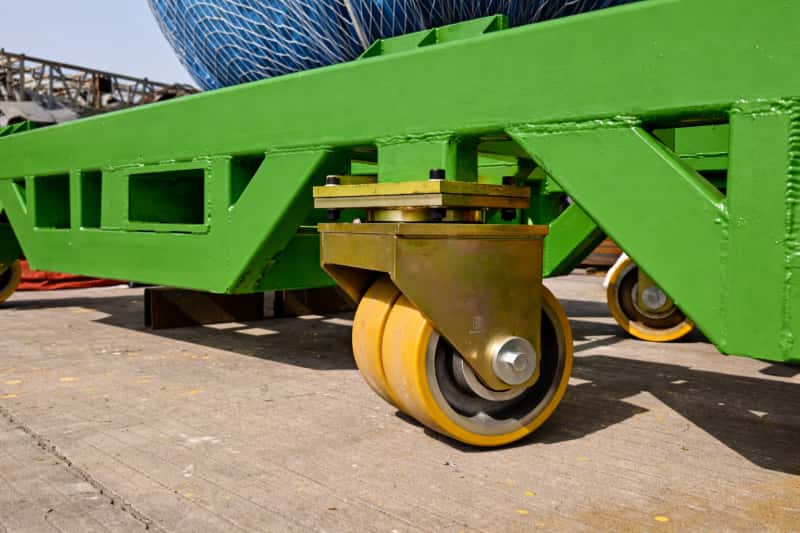
This is one of the biggest advantages of polyurethane. Its tough and rigid nature means it can withstand immense pressure. When you look at two casters of the exact same diameter and width, the polyurethane one will almost always have a higher load rating. For example, a standard 4-inch rubber caster might be rated for 120 kg, while a 4-inch polyurethane caster from our heavy-duty line can be rated for 300 kg or more.
Why the big difference? It comes down to material compression.
- Rubber: Under a heavy load, a rubber wheel will compress and flatten out at the bottom. Too much weight can cause it to permanently deform or even split.
- Polyurethane: A PU wheel resists this compression. It maintains its shape under heavy loads, allowing it to roll smoothly and safely carry more weight.
This is why our clients in heavy manufacturing, like automotive production lines and aerospace facilities, almost exclusively use polyurethane casters for their production carts and equipment stands. They need the reliability and strength that only PU can provide.
Which Caster Will Last Longer?
Are you tired of constantly replacing worn-out caster wheels? This downtime costs you money and interrupts your work. Choosing a more durable material from the start is the key.
Polyurethane casters are much more resistant to wear, tear, and abrasion than rubber casters.5 They will last significantly longer, especially in applications involving frequent movement and pivoting.
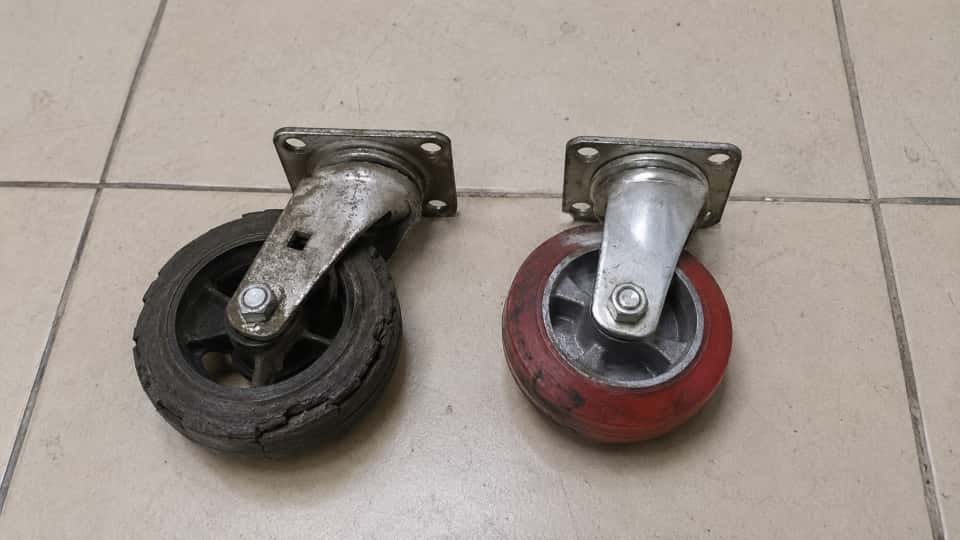
In a busy industrial setting, casters are put through a lot of abuse. They are rolled for miles over concrete, pivoted sharply, and sometimes dragged sideways. This is where material toughness really counts. Polyurethane has a much higher resistance to abrasion than rubber. The strong chemical bonds in PU make it difficult to tear or wear down. A rubber wheel, being softer, will simply wear away much faster under the same conditions.
However, there is an important consideration for polyurethane: hydrolysis. If PU wheels are stored for a long time (over a year) in a very hot and humid environment, they can begin to break down chemically. The material can become brittle and crack. We've seen this happen with clients in tropical climates. Because of this, we have started to offer advanced, wear-resistant PVC wheels as an alternative for customers concerned about hydrolysis. But for most environments, polyurethane's lifespan is far superior to rubber, making it a better long-term investment despite its higher initial cost.
How Can You Make Your Carts Move More Quietly?
Is the constant clatter of carts driving you crazy? A noisy environment can be distracting, unpleasant, and even violate workplace noise regulations. The right wheel material can make a world of difference.
For quiet operation, rubber casters are the best choice. Their soft, elastic material dampens sound and absorbs vibrations, resulting in a significantly quieter roll compared to harder polyurethane wheels.
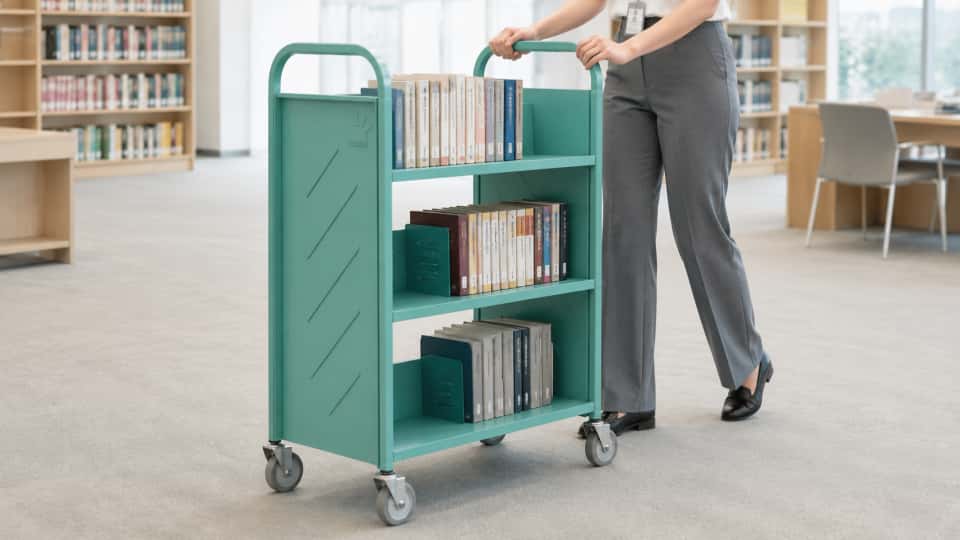
The same quality that gives rubber its excellent shock absorption also makes it incredibly quiet. The soft material absorbs sound energy instead of reflecting it. When a rubber wheel rolls over a seam in the floor or a small piece of debris, it makes a soft thud. A hard polyurethane wheel, in the same situation, will make a loud crack or click.
This is a critical feature in certain environments. We supply a huge number of rubber casters to hospitals, libraries, hotels, and offices for this exact reason. In these places, noise control is not just a preference, it's a requirement. I once worked with a hotel manager who was getting guest complaints about the noise from early morning housekeeping carts. We replaced their old, hard plastic wheels with our non-marking gray rubber casters, and the problem disappeared overnight. While polyurethane is certainly quieter than steel or phenolic casters, it simply cannot compete with the near-silent operation of rubber.
Which Caster Stands Up to Oils and Chemicals?
Are you working in a garage, kitchen, or factory with chemical spills or grease? The wrong caster material can degrade and fail quickly, creating a safety hazard and a costly mess.
Polyurethane casters have excellent resistance to most common oils, greases, solvents, and chemicals. Natural rubber, on the other hand, can swell, soften, and quickly break down when exposed to these substances.6
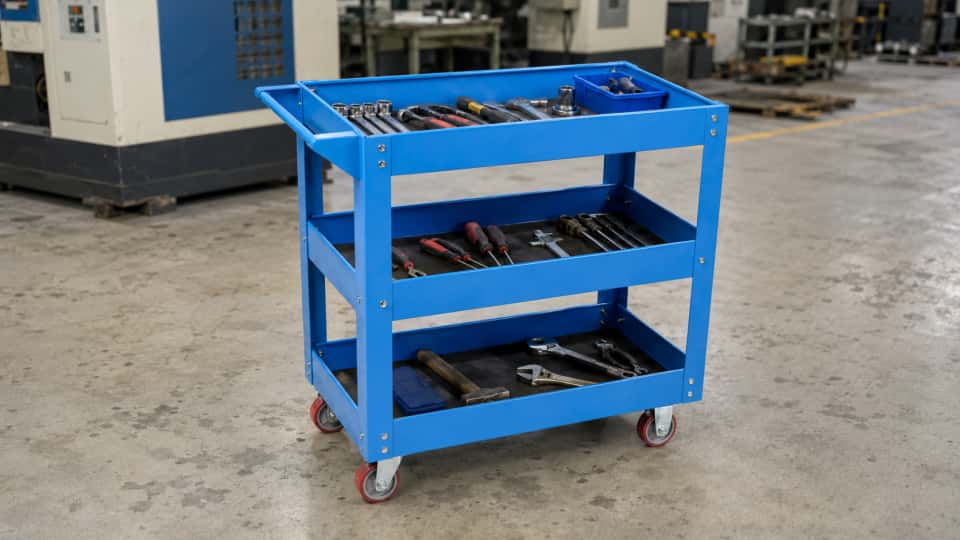
This is a non-negotiable point for many of our clients. In environments like automotive repair shops, food processing plants, and chemical factories, floors are often contaminated with various substances.
| Substance | Polyurethane (PU) Reaction | Rubber Reaction |
|---|---|---|
| Oils & Greases | Excellent Resistance | Poor - Swells and weakens |
| Gasoline | Good Resistance | Very Poor - Dissolves |
| Cleaning Solvents | Good to Excellent Resistance | Poor to Fair Resistance |
| Water | Excellent Resistance | Good Resistance |
As you can see, polyurethane is the clear winner. Natural rubber is particularly vulnerable to petroleum-based products. They cause the rubber to swell up, lose its strength, and fall apart. Polyurethane's chemical structure is much more stable and can handle this exposure without any issues. This is why, for our food industry clients, we often pair a stainless steel caster bracket (for rust prevention) with a polyurethane wheel. It creates a complete solution that can withstand both harsh cleaning chemicals and frequent wash-downs, while also meeting standards like EN12532 and FDA requirements.
Which Caster Is More Budget-Friendly?
Trying to manage project costs without sacrificing performance? The price of components like casters adds up quickly. Making a smart choice here can directly impact your bottom line.
Rubber casters are generally much more affordable than polyurethane casters. If your primary concern is the initial purchase price, rubber is the more economical option for most general-purpose applications.
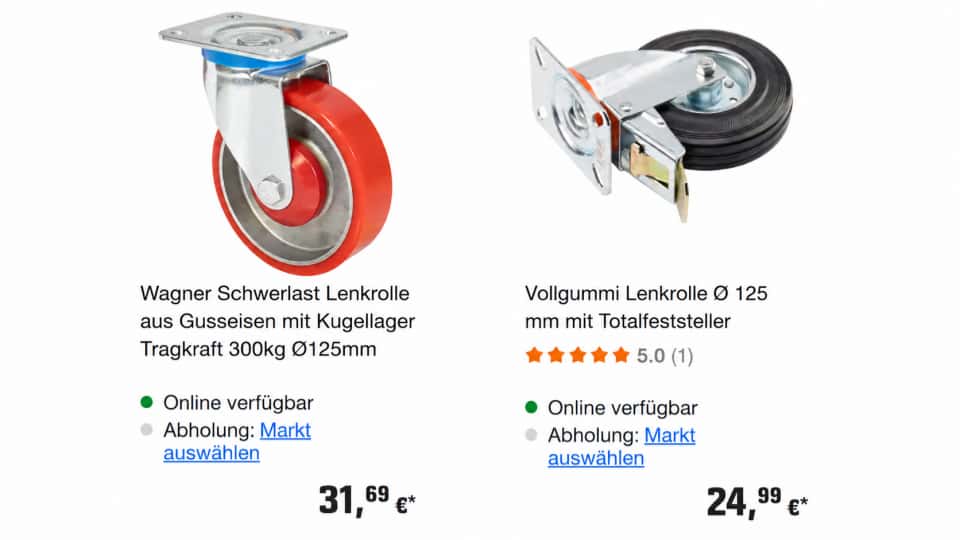
The lower cost of rubber is due to cheaper raw materials and a more established, simpler manufacturing process. For our large retail customers, like the big hardware store chains in Europe, this is a major selling point. They buy hundreds of thousands of our standard black rubber casters because they are a versatile, low-cost option for the DIY consumer and for light industrial use. When they place these large orders, we always ensure our products meet strict standards, like the PAHs limits required for GS certification in Germany.
However, the initial price isn't the whole story. You should also think about the "total cost of ownership."
- Upfront Cost: Rubber is cheaper to buy.
- Long-Term Cost: Polyurethane often lasts much longer and requires fewer replacements.
If your casters will be used heavily every day, the higher initial cost of a PU wheel can be a smart investment. You will save money in the long run on labor and replacement parts. For a home project or light-duty cart that is used infrequently, the more affordable rubber caster is the perfect choice. It all depends on how you plan to use it.
Conclusion
Ultimately, choosing between rubber and PU depends on your specific needs. Rubber offers a quiet, cushioned ride at a low cost, while PU provides superior durability and high load capacity.
---"What Are the Best Casters for Shock Absorption?", https://monroeengineering.com/blog/what-are-the-best-casters-for-shock-absorption/. Research indicates that rubber casters are often chosen for their shock absorption capabilities, suitability for rough surfaces, and ability to provide quiet operation. Evidence role: general_support; source type: research. Supports: the general characteristics and common applications of rubber casters, particularly their shock-absorbing and quiet properties. ↩
"Chemical resistance of wheels - Industrialwheels.com", https://www.industrialwheels.com/en/chemical-resistance-of-wheels-castors/. Studies show that polyurethane casters are valued for their high load capacity, superior durability, and chemical resistance, making them suitable for demanding industrial settings and floor protection. Evidence role: general_support; source type: research. Supports: the general characteristics and common applications of polyurethane casters, highlighting their load capacity, durability, and chemical resistance. ↩
"Rolling resistance", https://en.wikipedia.org/wiki/Rolling_resistance. Engineering principles and material science studies generally confirm that polyurethane casters exhibit lower rolling resistance compared to rubber casters due to differences in material hardness and deformation. Evidence role: expert_consensus; source type: research. Supports: the comparative rolling resistance between polyurethane and rubber casters. ↩
"Non-Marking vs. Non-Marring Caster Wheels", https://castercity.com/non-marking-non-marking-caster-wheels/?srsltid=AfmBOoo0ICMpwE9XQaGnYHaPEPq1IFWntqsUpNm-x4T-ZxbOcIVrgdOU. Material science literature indicates that carbon black, a common filler in black rubber compounds, can transfer to and mark certain floor surfaces upon friction. Evidence role: mechanism; source type: research. Supports: the claim that carbon black, commonly used in standard black rubber casters, can lead to floor marking. ↩
"Polyurethane's Abrasion Resistance", https://gallaghercorp.com/polyurethane-abrasion-resistance/. Material science studies and industrial testing consistently demonstrate that polyurethane compounds offer superior resistance to wear, tear, and abrasion when compared to typical rubber formulations. Evidence role: expert_consensus; source type: research. Supports: the claim that polyurethane casters exhibit greater resistance to wear, tear, and abrasion compared to rubber casters. ↩
"Polyurethane Chemical Compatibility Chart", https://psiurethanes.com/urethane-and-polyurethane-chemical-compatibility/. Material compatibility charts and chemical resistance data consistently show that polyurethane offers excellent resistance to a wide range of oils, greases, and solvents, whereas natural rubber is known to swell, soften, and degrade upon exposure to many of these chemicals. Evidence role: expert_consensus; source type: research. Supports: the comparative chemical resistance of polyurethane casters to common oils, greases, solvents, and chemicals, contrasting it with the vulnerability of natural rubber to such substances. ↩