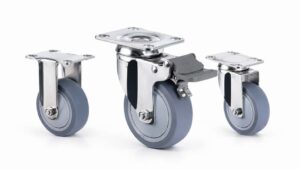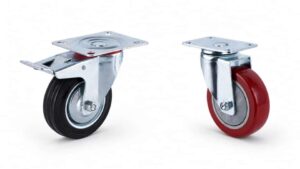

Choosing the right caster is tough. A wrong move means wasted money and performance issues. This guide simplifies the choice between PU and PVC for your specific needs.
Polyurethane (PU) offers superior performance like elasticity, floor protection, and wear resistance, but it comes at a higher price. Polyvinyl Chloride (PVC)1 is a lower-cost, harder alternative that excels in chemical and water resistance. The "better" material truly depends on your application, budget, and environment.
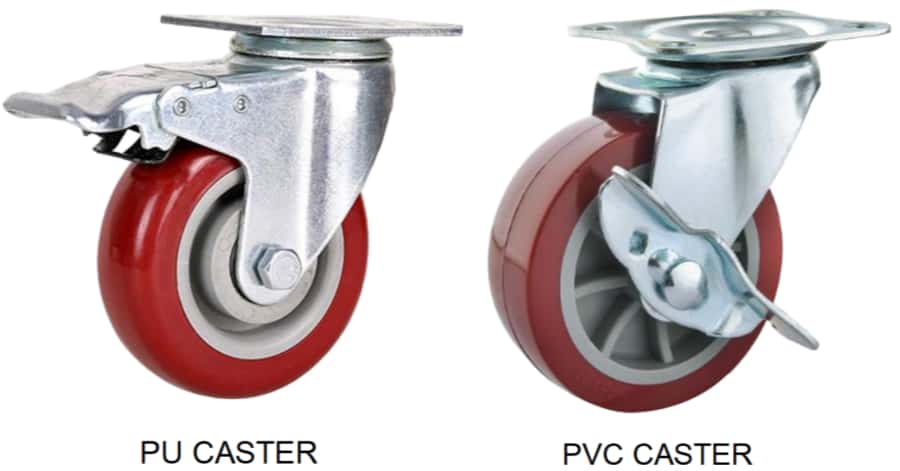
I've been exporting casters for over 12 years. I've seen customers make brilliant choices and I've seen them make costly mistakes by picking the wrong material. It's a common point of confusion, but it doesn't have to be. Let's break down everything you need to know, so you can make the right call for your business and avoid any headaches down the road.
What Exactly is Polyurethane (PU)?
You hear "PU wheel" all the time. But what does that actually mean for performance and durability? Let's make it clear so you know what you're buying.
PU, or Polyurethane, is a unique polymer used to make caster wheels. It acts like a hybrid, combining the shock-absorbing elasticity of rubber with the toughness and durability of a hard plastic. This makes it strong, long-lasting, and gentle on floors.
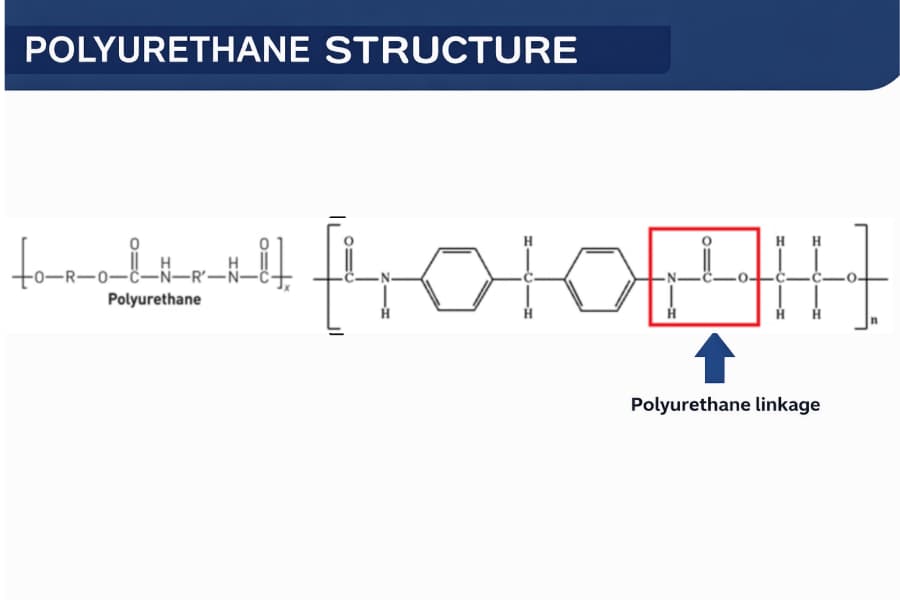
Polyurethane is a fascinating material. In technical terms, it's a polymer created by reacting a diisocyanate with a polyol. But what does that mean for a caster wheel? It means we can engineer its properties very precisely. We can make it soft like a pencil eraser or hard as a bowling ball. For casters, we aim for a sweet spot that provides a quiet, smooth roll while being able to handle heavy loads without permanently deforming.
There are two main types we use in caster manufacturing:
- Polyester-based PU: This type is incredibly tough and has excellent resistance to abrasion and cuts. It's ideal for demanding industrial environments where wheels might roll over debris.
- Polyether-based PU: This type performs better in wet or humid conditions. It has superior resistance to hydrolysis2, which is when a material breaks down from contact with water.
Understanding this distinction is key to choosing a durable wheel.
And What is Polyvinyl Chloride (PVC)?
PVC is often seen as just the cheap option. But is there more to it than just the low price tag? Let's look at its real properties and uses.
PVC, or Polyvinyl Chloride, is a very common and rigid thermoplastic polymer. When used for caster wheels, it creates a hard, low-friction surface. It's known for its very low cost and its high resistance to many chemicals, oils, and water.
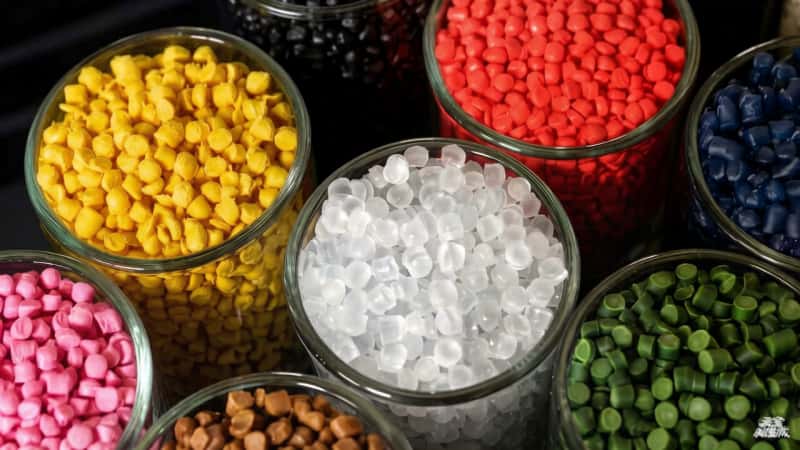
PVC is one of the most produced plastics in the world. For casters, it's made into a wheel through injection molding. The result is a very hard and rigid wheel. Unlike PU, PVC has almost no elasticity or cushioning. This means the ride is rougher and louder, and it's not ideal for protecting delicate floors. However, its hardness means it can handle heavy static loads very well.
A critical point I always discuss with my clients is the quality of the PVC. To cut costs, some factories use recycled PVC3. This can be a huge problem. Recycled PVC often contains impurities that, when heated during injection molding, can release corrosive gases. These gases attack the steel of our expensive molds, drastically shortening their lifespan. This is why we are extremely careful about sourcing only high-grade, virgin PVC4 for our wheels to ensure consistent quality and protect our manufacturing equipment.
Are All PU and PVC Materials the Same for Casters?
You might think all PU is the same. But the type used for a quiet hospital cart is very different from one on a factory trolley. Let's see why.
Absolutely not. We select specific formulations for each application. For PU, we choose between polyester for toughness or polyether for water resistance. For PVC, we use specific virgin grades to ensure durability and avoid issues caused by cheap, recycled materials.
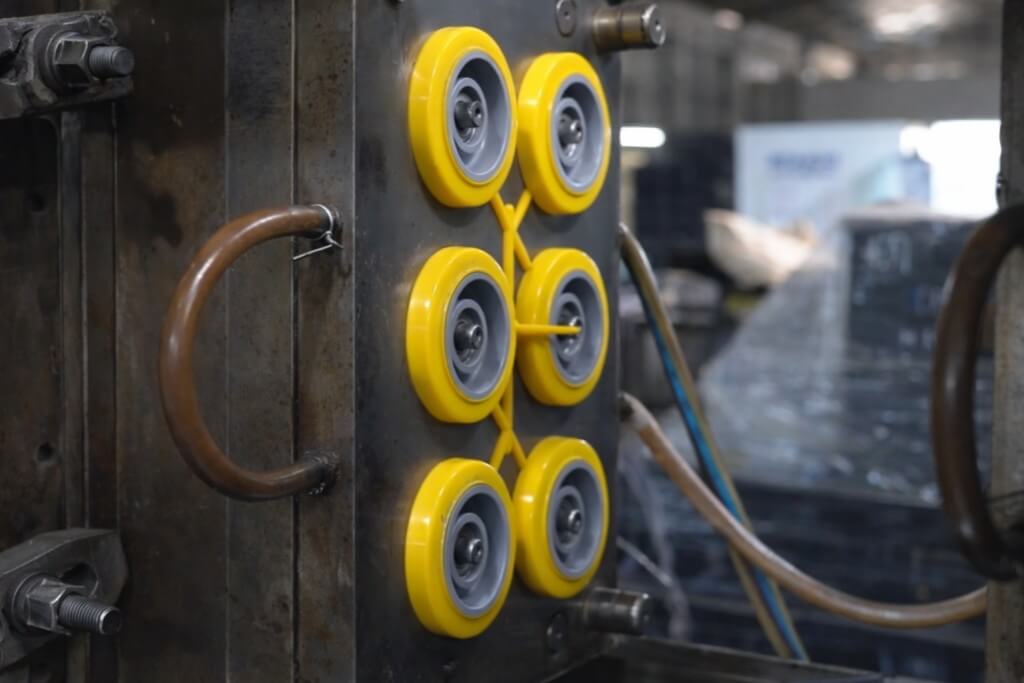
The material you choose is not just "PU" or "PVC"; it's a specific formulation designed for a purpose. We work with our material suppliers to create compounds that meet standards like RoHS and REACH.
Caster-Specific PU Formulations
For polyurethane, the choice primarily comes down to the base polymer. A wheel for a food processing plant, which is frequently washed down, needs a different PU than a wheel in a dry warehouse.
- Polyester-Based PU: We use this for our heavy-duty casters. Its superior tear and abrasion resistance make it perfect for automotive manufacturing or logistics centers where wheels need to survive rough concrete and potential debris.
- Polyether-Based PU: We recommend this for applications in humid environments or where wheels are exposed to water. It resists hydrolysis much better, preventing the material from becoming brittle and failing over time.
Caster-Specific PVC Grades
With PVC, the main distinction is between quality and cost.
- Virgin PVC: This is our standard. It provides predictable hardness, color consistency, and impact strength. It behaves perfectly in our injection molding machines without damaging them.
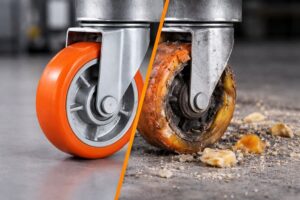
- Recycled PVC: We generally avoid this. While it lowers the initial price, it's a risky trade-off. Inconsistent quality can lead to brittle wheels, and the potential damage to our molds makes it a poor long-term choice for a reliable supplier.
PU vs. PVC: What are the Real Pros and Cons?
Making the wrong choice can lead to failed wheels, damaged floors, and unhappy customers. Let's compare PU and PVC head-to-head to prevent that from happening.
PU is the premium choice, offering a quiet, cushioned ride that protects floors but costs more. PVC is the budget-friendly workhorse, offering hardness and chemical resistance but is noisy and can leave marks. The right one depends entirely on your priorities.
As a caster supplier, I see clients grapple with this decision daily. The market is competitive, and the temptation to simply choose the cheaper PVC option is strong. However, saving a few cents on the wheel can lead to greater costs later. Let’s lay it all out in a simple table to make the comparison clear.
| Feature | Polyurethane (PU) | Polyvinyl Chloride (PVC) |
|---|---|---|
| Price | Higher | Lower |
| Performance | Quiet, smooth, cushioned ride | Loud, rough, rigid ride |
| Floor Protection | Excellent, non-marking | Poor, can scuff or mark floors |
| Durability | Excellent wear & tear resistance | Fair, can crack under impact |
| Hardness | Variable (often 85A-95A Shore) | Very High (often 75D Shore) |
| Load Capacity | Very Good | Good (especially static loads) |
| Chemical Resistance | Good | Excellent |
| Hydrolysis Risk | Yes (especially Polyester PU) | No |
The choice often comes down to performance versus budget. If the caster is for equipment that will be moved frequently across nice floors in a workplace, hospital, or home, PU is almost always the better investment. If the caster is for a shop display that rarely moves or for a project where cost is the absolute number one factor, PVC can be a suitable choice.
So, How Do You Choose Between PU and PVC for Your Casters?
Feeling overwhelmed by the options? Don't worry. The right choice is simple once you answer a few key questions about your needs and environment.
Choose PU for applications where floor protection, quiet operation, and a cushioned ride are important. Choose PVC for budget-critical projects, applications in wet environments, or where resistance to chemicals is the top priority and noise is not a concern.
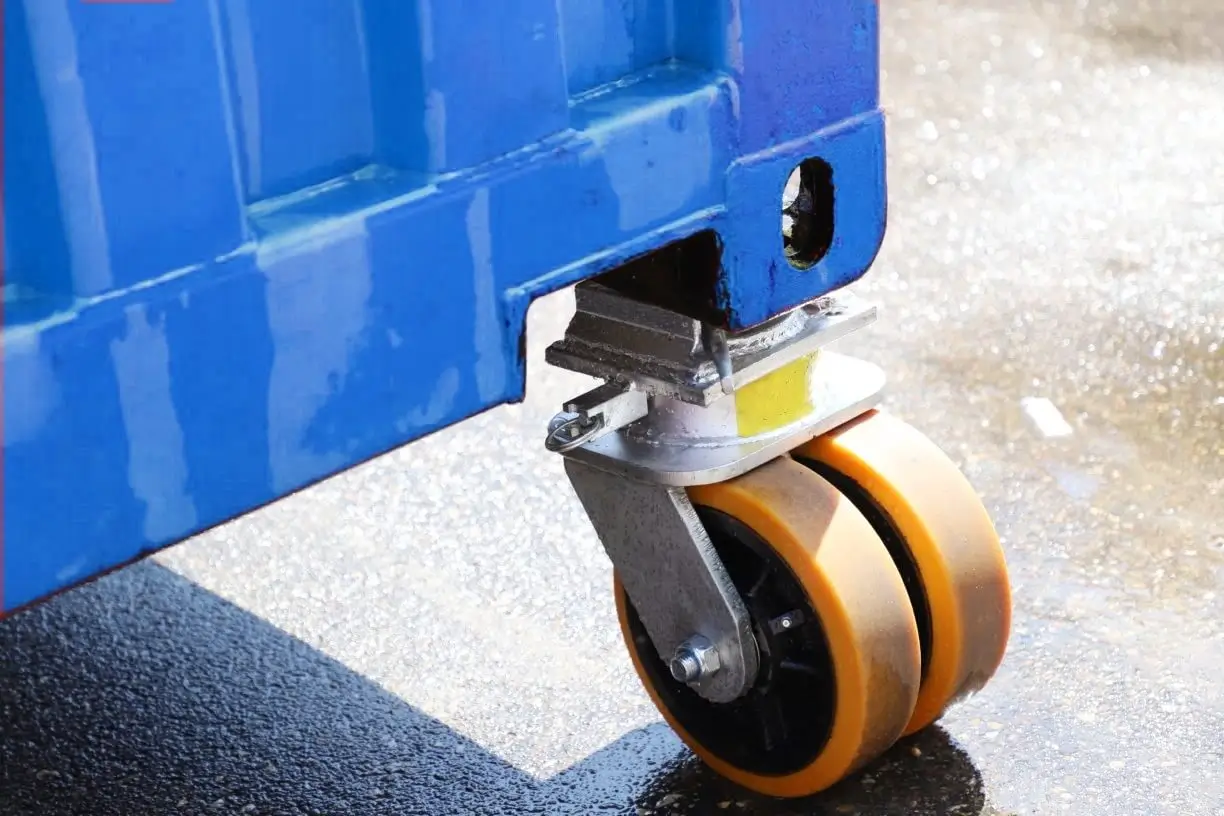
After years of guiding clients, I've learned that the right choice always starts with the application, not the price list. Let's look at specific scenarios.
When to Choose PU Casters
If your primary concerns are performance and protecting your assets, PU is your best bet. We recommend PU wheels for:
- Hospitals and Institutions: The quiet roll and non-marking properties are essential.
- Retail and Showrooms: Protects expensive flooring like hardwood, tile, and laminate.
- Electronics Manufacturing: We can add anti-static compounds5 to the PU to create ESD-safe wheels that protect sensitive components.
- General Industrial Use: The durability and shock absorption of PU wheels reduce vibration and noise in factories, which improves the work environment.
When to Choose PVC Casters
Despite its drawbacks, PVC has its place. The market is competitive, and sometimes a lower price point is necessary to win a project. We see PVC as a good fit for:
- Budget-Conscious Distributors: For hardware chains or distributors competing heavily on price, PVC allows them to offer a functional, low-cost option.
- DIY and Light-Duty Furniture: For projects that will not be moved often or where performance is not critical.
- Specific Environments: I learned a valuable lesson from one of my distributors in Southeast Asia. They refuse to stock PU casters. I was surprised and asked why. He explained that the constant high heat and humidity cause polyester-based PU wheels to hydrolyze and crumble if they sit in a warehouse for too long. For him, PVC is a much safer material to hold in inventory because it's completely unaffected by moisture. It's a perfect example of how the local environment can make PVC the smarter business choice.
Conclusion
The best wheel isn't just PU or PVC. It's about matching the right material to your specific application, budget, and environment to ensure reliability and long-term success.
Learn about the cost-effective benefits of PVC, including its chemical and water resistance, making it a popular choice for certain applications. ↩
Understand the process of hydrolysis and its impact on materials like Polyester-based PU in humid conditions. ↩
Understand the potential drawbacks of recycled PVC, including quality inconsistencies and damage to manufacturing equipment. ↩
Explore the benefits of using high-grade virgin PVC over recycled materials for consistent quality and durability. ↩
Explore how adding anti-static compounds to PU casters can protect sensitive electronic components. ↩