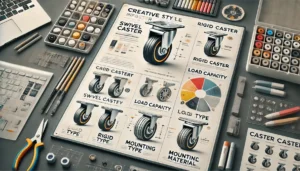

Small wheel casters can solve a real mobility problem when a product needs low mounting height, light-load movement, and compact design. However, buyers often feel pressure to choose the smallest or cheapest option. That can create pushing resistance, floor damage, noise, or early wear. The better solution is to match caster size, load, floor, and use pattern before comparing price.
Small wheel casters are compact mobility components used when equipment, carts, furniture, racks, or light machines need movement without adding much height. They work best when the load is controlled, the floor is suitable, and the movement pattern is clear. Buyers should evaluate capacity, safety margin, wheel material, bearings, mounting style, and supplier grade before ordering.
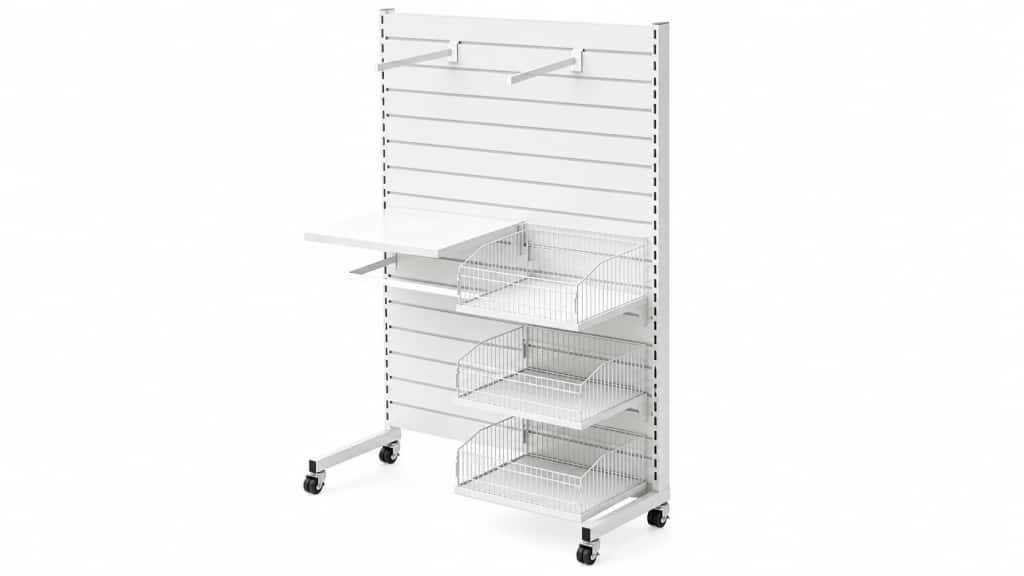
In my quotation discussions, buyers often ask for “small casters” first and application details later. I usually reverse that order. A small wheel can be the right answer, but only after the real operating conditions are clear.
What Are Small Wheel Casters, and When Do They Make Sense?
Small wheel casters look simple, so buyers sometimes treat them as basic hardware. That creates a risk. A low-profile wheel can reduce product height, but it can also reduce rolling comfort if the load, floor, or movement frequency is not suitable.
Small wheel casters are swivel or rigid caster assemblies with smaller wheel diameters, often used for light-duty carts, display racks, equipment bases, furniture, cabinets, and compact machines. They make sense when low mounting height matters and the load is moderate, but they should not be selected by diameter alone.
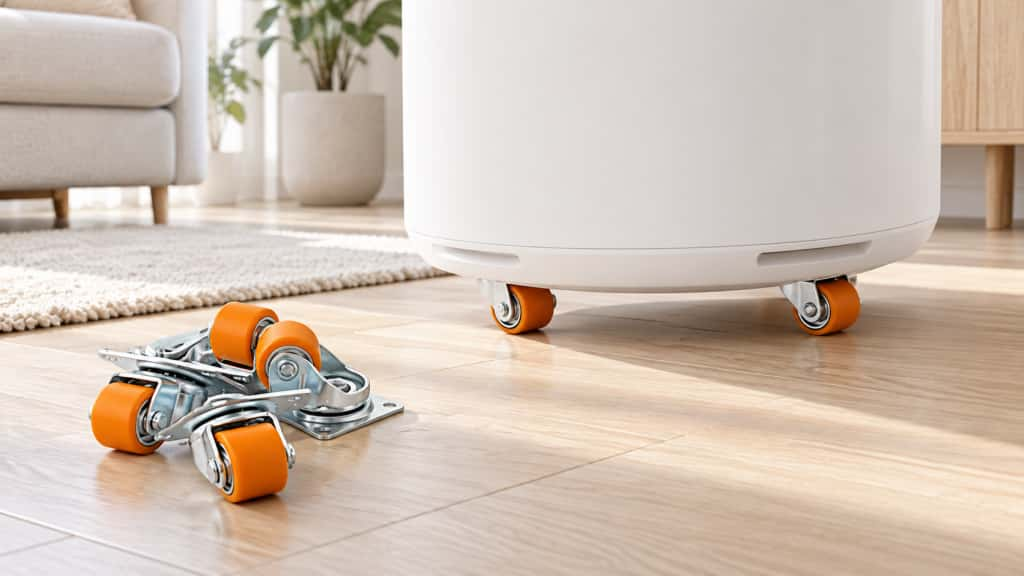
Small does not automatically mean better
A common mistake is to see a small caster as a universal upgrade because it is compact, light, and usually less expensive. I understand why this happens. In pre-sales communication, many buyers start with a target height. They may say, “I need the whole equipment base to stay low,” or “The wheel cannot be too visible.” Those are valid needs. But wheel diameter changes more than appearance.
A smaller wheel usually gives:
- Lower mounting height
- Lower product profile
- Less visible hardware
- Easier packaging in compact equipment
- Potential cost savings in light-duty use
At the same time, a smaller wheel may also create:
- Higher rolling resistance1
- More difficulty crossing gaps or floor joints
- More vibration on rough floors
- Higher stress on the wheel material
- Less tolerance for uneven load distribution
That is why I treat small wheel casters as a trade-off, not as a category that is automatically “better.”
Typical applications for small caster wheels
Small wheel casters are common in many B2B and channel markets. I often see them requested for:
| Application | Typical Buying Concern | Selection Focus |
|---|---|---|
| Light carts | Easy pushing and low cost | Wheel material, bearing, load margin |
| Display racks | Appearance and smooth movement | TPR/PU wheels, quiet rolling |
| Sheet metal cabinets | Low height and stable support | Mounting plate, load distribution |
| IT equipment stands | Controlled indoor movement | Floor protection, brake option |
| Medical or food-area auxiliary equipment | Cleanability and noise | Material choice, supplier documentation |
| DIY furniture | Price and compact design | Basic load rating, mounting fit |
The height trade-off matters
Buyers often ask for the smallest possible wheel because the equipment has a height limit. That is understandable. But I usually clarify three things before recommending a size:
- What is the total load, including product weight and contents?
- How often will the item move?
- What floor will the caster run on?
For example, a small caster under a static cabinet may work well if the cabinet only moves occasionally for cleaning. The same caster under a frequently moved tool trolley may feel heavy and wear faster, even if the load rating looks acceptable.
The key point is simple: small wheel casters are useful when compact height is more important than obstacle-crossing ability and heavy-duty rolling performance. If buyers need both low height and frequent movement, the selection becomes more specific. In that case, wheel material, bearing type, and safety margin become very important.
How Should Buyers Size Small Wheel Casters Beyond Rated Load?
Rated load is useful, but it is not enough. Buyers often divide total weight by four and then choose the nearest caster capacity. That looks logical on paper. In real use, movement, impact, uneven floors, and uneven weight distribution can change the actual load on each caster.
Buyers should size small wheel casters by total load, safety margin, number of load-bearing casters, dynamic movement, floor condition, and expected use frequency. A practical approach is to calculate the load per caster, then add a safety factor instead of selecting a wheel at its maximum published rating.
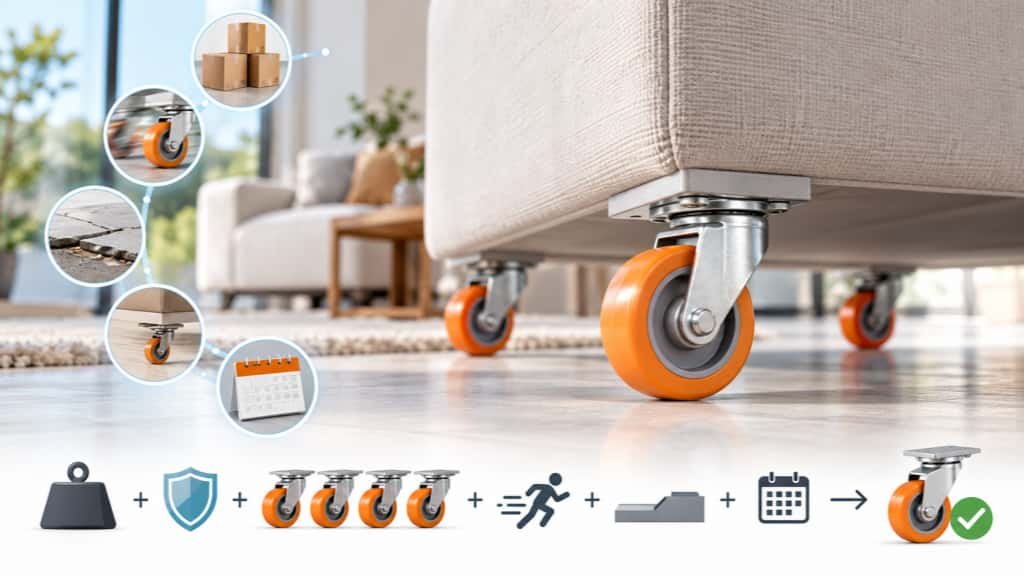
Why “capacity per caster” can mislead buyers
In many quotations, the first question is: “How many kilograms can one caster carry?” That is a fair question, but it can lead to a weak decision if the buyer stops there.
A caster load rating is usually based on a controlled product specification. It does not automatically account for every real condition, such as:
- Uneven floors
- Sudden pushing or pulling
- Side impact
- Weight shifting during movement
- Poor mounting alignment
- Frequent starts and stops
- Small debris on the floor
- Operators pushing from one side
Because of that, I encourage buyers to avoid using the full rated capacity as the working load. A safety margin is especially important for small wheel casters because the contact area is smaller and the wheel has less ability to roll over obstacles.
A practical load calculation
A simple purchasing calculation can look like this:
| Step | Example |
|---|---|
| Total equipment weight | 120 kg |
| Number of casters | 4 |
| Basic load per caster | 30 kg |
| Suggested safety factor | 1.3–1.5 for light controlled use |
| Target caster rating | 39–45 kg minimum per caster |
For more demanding use, the margin should be higher. If only three casters may touch the floor because of uneven surfaces, some buyers calculate the load using three casters instead of four.2 That gives a more conservative estimate:
120 kg ÷ 3 = 40 kg per caster before safety margin.
This method is useful for procurement screening. It does not replace engineering validation for critical equipment, but it helps buyers avoid undersized components.
Dynamic load changes the decision
A static display rack and a frequently moved cart may have the same weight, but they do not need the same caster. Movement creates dynamic load.3 When a worker pushes a cart, the casters experience turning force, vibration, and sometimes impact. Small wheel casters can handle light movement well, but they must be chosen with the movement pattern in mind.
I usually ask buyers:
- Will the product move daily, weekly, or only during maintenance?
- Will one person push it by hand?
- Will the floor have thresholds, elevator gaps, or expansion joints?
- Will the load shift while moving?
- Does the application need brakes or directional control?
These questions often reveal that the cheapest small caster is not always the lowest-cost choice over time. If a wheel is too small or too hard for the floor, operators may complain. If the capacity is too close to the limit, replacement frequency may rise.
The best sizing decision balances rated load, safety margin, wheel diameter, and real movement conditions. That balance is more reliable than selecting small wheel casters by load rating alone.
Which Wheel Materials and Bearings Make Small Wheel Casters Move Better?
Material and bearing choice can change how a small caster feels in use. Buyers may compare two casters with the same diameter and load rating, but the rolling experience can be very different. Noise, floor protection, swivel comfort, and price often depend on these hidden details.
Small wheel casters move better when the wheel material, tread hardness, and bearing type match the floor and load. PU and TPR often improve noise and floor protection, nylon can suit harder industrial floors, and ball bearings usually roll more smoothly than plain bore designs in frequent movement.
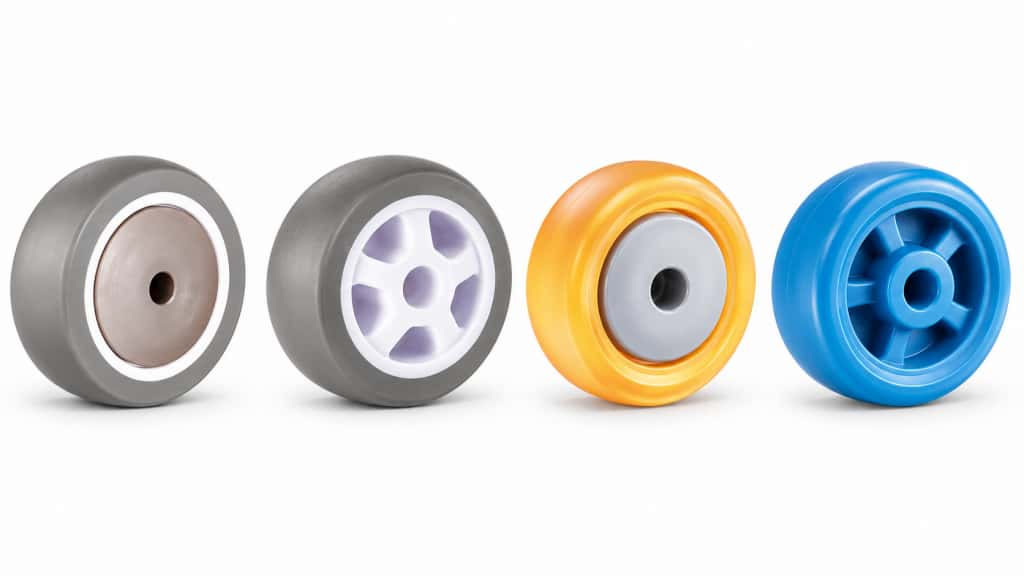
Wheel material affects noise, floor care, and effort
When buyers send inquiries, they often specify size and mounting method first. Material may come later. However, material can be the difference between a caster that feels smooth and one that feels harsh.
Here is a practical comparison for procurement discussions:
| Wheel Material | Common Strength | Common Limitation | Typical Fit |
|---|---|---|---|
| PP | Economical, light-duty use | Harder ride, less quiet | Basic furniture, low-cost products |
| Nylon | Stronger, wear-resistant on hard floors | Can be noisy, may mark some floors | Industrial carts, equipment bases |
| PU | Good balance of durability and floor protection | Usually higher cost than PP | Light industrial and commercial use |
| TPR | Quiet, softer rolling, floor-friendly | Lower resistance to some harsh conditions | Display racks, indoor carts, furniture |
| Rubber | Shock absorption and grip | May age or mark floors depending on grade | General indoor mobility |
This table is not a universal rule. A buyer should confirm the exact formulation, hardness, and supplier specification. Still, it gives a useful starting point.
Bearing type affects push force
Small wheel casters already have less diameter to help them roll over small obstacles. Because of that, the bearing type becomes important.
Common bearing options include:
- Plain bore: Simple and economical. It can be enough for occasional movement.
- Sleeve bearing: More controlled than a basic bore in some designs. It is still usually cost-oriented.
- Ball bearing: Smoother rolling under suitable loads. It often fits frequent movement better.
- Precision bearing: Used when smoother, quieter, or more controlled movement is needed, depending on product grade.
In my sourcing work, I do not present bearing type as a magic solution. A ball bearing cannot fix a wheel that is too small for a rough floor. But it can improve the user experience when the wheel size and material are already suitable.
Material selection should follow the floor
A clean tile floor and a rough concrete floor do not ask for the same wheel. For example, a hard nylon wheel may roll well on smooth industrial flooring, but it may sound loud in a retail or office environment. A softer TPR wheel may feel quiet on indoor floors, but it may not suit every oily, rough, or high-load setting.
I usually separate material decisions into four buyer questions:
- Is floor protection important?
- Is low noise important?
- Is the floor smooth or rough?
- Is chemical, oil, water, or temperature exposure expected?
If the application involves food manufacturing, medical equipment, or special environments, buyers should request supplier documentation and verify relevant standards or certifications. A trading and sourcing partner can help screen product grades and factory options, but application-specific approval should be handled by qualified professionals when safety or compliance is critical.
The practical lesson is clear: small wheel casters need the right material and bearing combination because their compact size leaves less room for poor matching.
How Do Floor Conditions and Movement Patterns Change Small Wheel Casters Selection?
Floor conditions are easy to overlook during price comparison. A caster that works on a smooth showroom floor may struggle on a warehouse floor with cracks, dust, or expansion joints. Movement frequency also matters because occasional movement and daily rolling create different stress.
Floor conditions and movement patterns affect small wheel casters by changing rolling resistance, noise, wear, vibration, and operator effort.4 Smooth indoor floors allow smaller wheels more easily, while rough concrete, thresholds, gaps, and frequent movement usually require more careful wheel diameter, material, bearing, and safety margin selection.
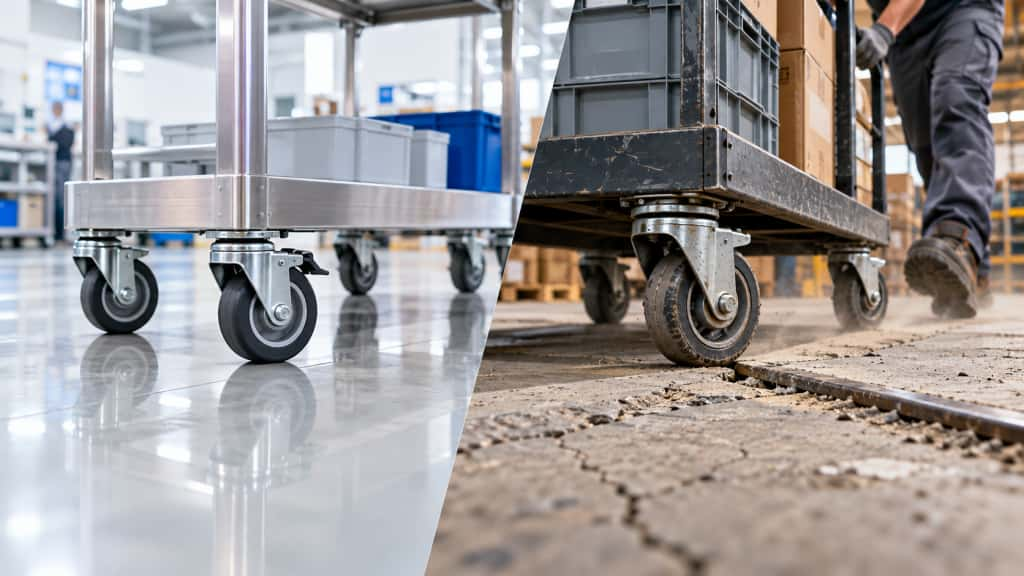
Smooth floors are more forgiving
Small wheel casters are easier to apply on smooth surfaces. Examples include:
- Office floors
- Retail floors
- Smooth epoxy floors
- Finished concrete
- Tile in controlled indoor areas
- Light workshop floors without major debris
On these floors, buyers can often prioritize mounting height, noise, and cost. A smaller diameter may work well if the load is light and movement is occasional. Even so, wheel hardness matters. Hard wheels may create more sound, while softer wheels may reduce noise and protect the floor.
Rough floors expose weak selections
Rough floors make small caster selection more difficult. A small wheel must rotate more times to cover the same distance as a larger wheel. It also has a harder time climbing over small obstacles.
Problem floor conditions include:
- Cracks
- Expansion joints
- Uneven concrete
- Metal floor plates
- Elevator gaps
- Door thresholds
- Cable covers
- Dust or chips from production areas
When the floor is rough, buyers should not choose small wheel casters only because the mounting height is attractive. The final product may become hard to push. In some cases, a slightly larger wheel gives better operating value, even if it raises the equipment height.
Movement pattern changes the grade requirement
A caster used once a month does not face the same demand as a caster pushed many times a day. I often clarify movement pattern in quotation discussions because it helps decide whether a basic caster is acceptable or whether the buyer should consider a higher product grade.
| Movement Pattern | Selection Priority | Practical Comment |
|---|---|---|
| Mostly static | Load support, low height, price | Basic options may be acceptable if load margin is safe |
| Occasional movement | Floor protection, brake option, smooth swivel | Good for cabinets, displays, light stands |
| Daily manual movement | Bearing, wheel material, safety factor | Operator comfort becomes important |
| Frequent directional changes | Swivel quality, brake type, mounting strength | Cheap swivel assemblies may disappoint |
| Long travel distance | Larger diameter may be better | Small wheels may increase pushing effort |
Noise is part of mobility quality
Some buyers focus only on weight capacity and price. However, noise can become a complaint after installation. This is common for commercial displays, retail fixtures, hospitals, offices, and residential DIY products.
A quieter caster may need:
- Softer tread material
- Better bearing quality
- Stronger swivel construction
- Proper brake design
- Better floor matching
Noise is not only about comfort. It can also signal vibration, poor material matching, or rough surfaces. Buyers should define acceptable noise expectations before ordering large quantities.
Brakes and mounting also matter
Small wheel casters often use plate mounts, stem mounts, threaded stems, grip rings, or bolt-hole designs. The mounting method should fit the product structure. A strong wheel cannot perform well if the mounting plate bends or the stem is poorly matched.
Brake selection also matters. Some small casters use wheel brakes, while others may offer total-lock designs depending on size and grade. Buyers should confirm whether the brake locks only the wheel or both the wheel and swivel. For equipment that must stay stable during use, this detail is important.
The main takeaway is simple: floor and movement details should come before final price comparison. A small caster chosen for a smooth floor may not be suitable for a rough production area.
How Should Buyers Compare Suppliers for Small Wheel Casters?
Supplier comparison can feel confusing because many small casters look similar in pictures. Price differences may seem hard to justify. But in sourcing work, I have seen that small differences in material, bearing, bracket thickness, finish, and quality control can change the final user experience.
Buyers should compare suppliers for small wheel casters by checking product grade, consistent specifications, material options, load rating basis, mounting accuracy, sample availability, packaging, documentation, and communication quality. The best supplier match depends on the buyer’s target market, application risk, order quantity, and cost position.
Product grade should match the sales channel
Not every buyer needs the highest-grade caster. A DIY retail product may need attractive packaging, stable appearance, and competitive pricing. An equipment manufacturer may care more about repeatable dimensions and long-term supply. A distributor may need a range that covers different customer needs.
I usually classify small wheel casters by buyer purpose:
| Buyer Type | Main Need | Supplier Matching Focus |
|---|---|---|
| Caster distributor | Range depth and repeat supply | Multiple sizes, materials, and price levels |
| Hardware wholesaler | Competitive SKUs | Stable packaging and common specifications |
| Equipment manufacturer | Application fit | Dimensional consistency and technical communication |
| Sheet metal fabricator | Mounting compatibility | Plate size, stem size, bracket strength |
| DIY/light furniture buyer | Cost and appearance | Basic function, finish, retail presentation |
This is where a sourcing partner can add value. We can help buyers compare factory resources and product grades based on the application and market position. That does not mean we replace engineering validation. It means we help narrow the options before samples, testing, or customer approval.
What buyers should request before ordering
For small wheel casters, I suggest buyers request more than a photo and a price. A clear inquiry should include:
- Wheel diameter and total mounting height
- Load rating per caster
- Wheel material and hardness if available
- Bearing type
- Bracket material and finish
- Mounting plate size or stem size
- Brake type if needed
- Application and floor condition
- Expected order quantity
- Packaging requirements
If certifications or compliance documents are relevant, buyers should request copies and verify them. Documents should be treated as part of supplier evaluation, not as decoration in a quotation file.
Samples reduce purchasing risk
Small casters are low-cost parts, but a wrong bulk order can still create a costly problem. A sample check can reveal issues that a photo cannot show.
Buyers can review:
- Wheel rolling feel
- Swivel smoothness
- Brake function
- Mounting fit
- Surface finish
- Noise on the target floor
- Packaging quality
- Marking or labeling accuracy
For application-specific equipment, buyers should run their own internal checks or ask qualified professionals to evaluate the caster in context. Supplier ratings and catalog data are useful, but the final installation condition matters.
Communication quality is a supplier signal
In my experience, good pre-sales communication often predicts fewer problems later. When a buyer asks for small wheel casters, I pay attention to whether the supplier asks application questions or only pushes the lowest price.
Strong supplier communication usually includes:
- Clear confirmation of dimensions
- Honest discussion of product grade
- Practical alternatives when the requested size is risky
- Stable lead time communication
- Willingness to provide samples or drawings
- Consistent quotation details
A low price can be attractive, but unclear specifications can create disputes. For distributors and OEM buyers, repeatability is often more valuable than saving a few cents on the first order.
The best supplier comparison is not “Who has the cheapest small caster?” It is “Which supplier can provide the right product grade for my load, floor, market, and cost target?”
Frequently Asked Questions
What size counts as small wheel casters?
Small wheel casters usually refer to compact casters with smaller wheel diameters, often used where low mounting height is important. The exact size depends on the market and application. Buyers should focus less on the label “small” and more on total height, load capacity, wheel material, and floor condition.
Are small wheel casters suitable for industrial equipment?
Small wheel casters can suit some light industrial equipment, especially when movement is occasional and floors are smooth. They may not be ideal for heavy loads, rough floors, long travel distances, or frequent movement. Buyers should check safety margin, mounting strength, and real operating conditions before ordering.
Do smaller caster wheels make equipment easier to move?
Smaller caster wheels do not always make equipment easier to move. They reduce mounting height, but they can increase rolling resistance and struggle with gaps or uneven floors. Larger wheels often roll more easily, while small wheels are better when compact design and low height are the main priorities.
Which material is best for small caster wheels?
There is no single best material. PU often offers a good balance of durability and floor protection. TPR can be quiet for indoor use. Nylon may fit harder industrial floors. PP can work for cost-sensitive light-duty products. Buyers should match material to floor, load, noise, and budget.
Should I choose swivel or rigid small wheel casters?
Swivel casters improve direction changes, while rigid casters improve straight-line control. Many carts use two swivel and two rigid casters, or four swivel casters when maneuverability matters most. For small wheel casters, buyers should also consider brakes, mounting layout, and operator pushing direction.
Conclusion
Small wheel casters are valuable when buyers need compact height, light-load mobility, and practical cost control. However, they should never be chosen only because they are small or inexpensive. The right choice depends on load margin, floor condition, wheel material, bearing type, mounting method, noise expectations, and supplier grade. If you are comparing options for distribution, equipment manufacturing, fabrication, or retail projects, I can help screen suitable caster specifications and match them with the right factory resources for your purchasing target.
"Wheel diameter and rolling resistance", https://physics.stackexchange.com/questions/842612/wheel-diameter-and-rolling-resistance. A technical source on rolling resistance should be cited to indicate that smaller wheel radius can increase resistance to motion under comparable load and surface conditions; the source would substantiate the underlying mechanism, while actual resistance depends on material, bearings, and floor geometry. Evidence role: mechanism; source type: research. Supports: A source should support the principle that wheel radius or diameter influences rolling resistance, especially over deformable or uneven surfaces.. Scope note: The exact magnitude will vary by wheel material, bearing design, load, and surface. ↩
"Caster Wheel Load Capacity: Calculate It Right", https://www.zambus.com/blog/caster-wheel-load-capacity/?srsltid=AU7gw4US1f8aqOmOG9cTu3Bjl1LaR-f-EC8IIPXVVEcJutok7mWHOG5D. A statics or material-handling source should be cited to show that uneven floor contact can prevent equal load sharing among four supports; this supports the conservative three-caster calculation as a screening method, not as a substitute for full structural analysis. Evidence role: mechanism; source type: education. Supports: A source should explain why uneven support can shift load among contact points and why conservative calculations may assume fewer load-bearing casters.. Scope note: The method is a conservative simplification and may not reflect exact load distribution in a specific frame. ↩
"Evaluation of Push and Pull Forces and Musculoskeletal ...", https://www.cdc.gov/niosh/hhe/reports/pdfs/2019-0004-3363.pdf. A government ergonomics or material-handling source should be cited to show that moving carts are subject to forces beyond static weight, including push-pull forces and effects of surface condition; this supports the need to consider dynamic use, although it may not provide a caster-specific load formula. Evidence role: mechanism; source type: government. Supports: A source should support that manual cart movement introduces additional forces such as acceleration, vibration, turning loads, or impact beyond static load.. Scope note: The evidence may address material-handling forces generally rather than caster ratings specifically. ↩
"Factors affecting minimum push and pull forces of manual ...", https://pubmed.ncbi.nlm.nih.gov/10327087/. A government ergonomics source should be cited to show that floor condition, wheel characteristics, and movement requirements affect push-pull forces and operator effort in cart handling; this supports the article’s general selection principle rather than quantifying wear or noise for a specific caster. Evidence role: expert_consensus; source type: government. Supports: A source should support that floor surface, wheel condition, and movement frequency affect push-pull force and manual material-handling effort.. Scope note: Government ergonomics sources may address carts broadly, not only small wheel casters. ↩