
Choosing the right caster for industrial or commercial equipment is a critical decision, and one of the first distinctions we often discuss with our clients is the difference between hard and soft casters. Making the wrong choice can lead to premature wear, floor damage, and inefficient operation, costing businesses time and money.
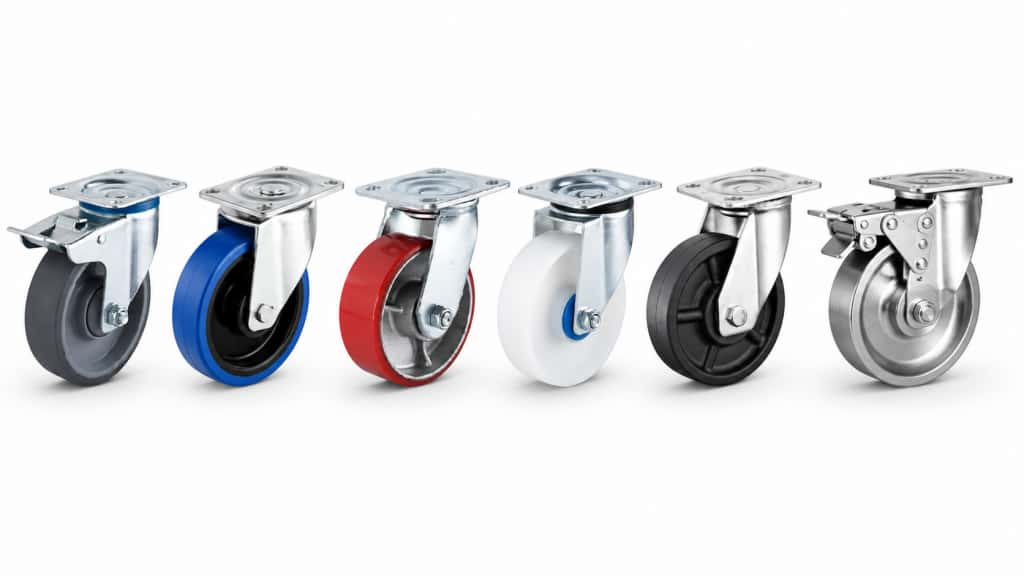
Hard and soft casters differ primarily in their material composition, which dictates their hardness, durometer, and how they interact with various floor surfaces. Hard casters, typically made from nylon or phenolic, excel on soft or uneven floors and for heavy loads, while soft casters, often rubber or polyurethane, are ideal for delicate, hard floors, offering better grip and shock absorption.
Understanding these fundamental differences is crucial for procurement managers, equipment manufacturers, and facility operators. Let's delve into the specific characteristics of each type, their ideal applications, and how to make an informed choice that optimizes performance and protects your assets.
What Are Hard Casters?
Are you struggling with heavy loads on uneven or soft surfaces, or in environments with chemical exposure? Selecting the wrong caster can lead to significant operational challenges, including difficulty maneuvering equipment and frequent caster replacement.
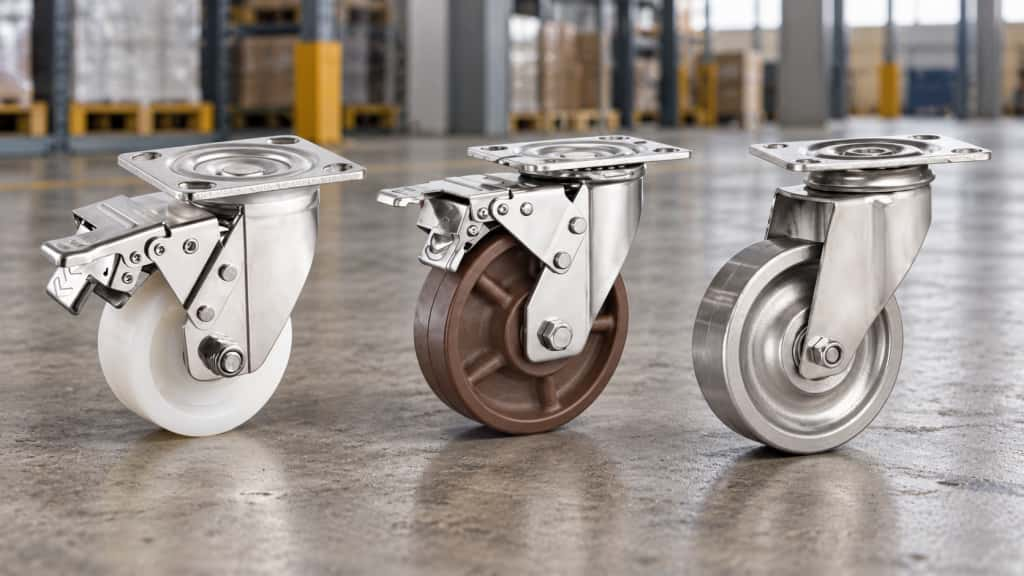
Hard casters are characterized by their rigid, durable wheel materials designed to withstand substantial weight and perform effectively on rough, uneven, or soft floor surfaces, such as carpet, dirt, or concrete with debris. They offer low rolling resistance and high load capacities but can be noisy and potentially damage delicate floors.
Dive Deeper: Characteristics and Applications of Hard Casters
From my experience in customer consultations, I've seen many businesses default to what they've always used, without considering if a hard caster is truly the best fit for their evolving needs. The key to understanding hard casters lies in their material science and how it translates to practical performance.
Material Composition
Hard casters are typically made from materials with a high durometer (a measure of hardness), such as:
- Nylon: A very hard and strong thermoplastic, offering excellent resistance to many chemicals, oils, and greases. Nylon casters are lightweight and provide very low rolling resistance, making them easy to push.
- Phenolic: Composed of macerated canvas or fabric impregnated with phenolic resin and molded under heat and pressure. Phenolic casters are extremely hard and offer high load capacities, excellent impact resistance, and are suitable for higher temperatures.
- Cast Iron/Steel: While less common for general-purpose industrial casters due to their weight and potential for floor damage, these are the hardest options, reserved for extremely heavy loads and abusive environments where floor preservation is not a primary concern.
Performance Attributes
The hardness of these materials translates into several key performance characteristics:
- High Load Capacity: Hard casters can support significantly heavier loads compared to their soft counterparts. Their rigid structure does not deform under pressure, distributing weight efficiently. This is why you often see them on heavy-duty carts in manufacturing plants or warehouses.
- Low Rolling Resistance: Because they don't deform, hard casters roll with minimal effort on appropriate surfaces. This makes it easier to move heavy equipment, improving efficiency for operators.
- Durability and Chemical Resistance: Materials like nylon and phenolic are highly resistant to cuts, abrasions, and a wide range of chemicals, oils, and cleaning agents. This makes them ideal for environments where spills or corrosive substances are present, such as food processing plants or chemical handling facilities.
- Temperature Resistance: Phenolic casters, in particular, are known for their ability to withstand higher operating temperatures, making them suitable for applications involving ovens or heated environments.
Ideal Applications
When evaluating options, I always ask clients about their primary floor surface and operational environment. Hard casters shine in specific scenarios:
- Concrete and Rough Surfaces: They perform exceptionally well on concrete floors, asphalt, or surfaces with minor imperfections and debris. Their hardness helps them roll over small obstacles without getting bogged down.
- Heavy-Duty Industrial Environments: Warehouses, manufacturing facilities, and assembly lines frequently utilize hard casters for their durability and load-bearing capabilities. Think about dollies moving engine parts or large machinery.
- Wet or Chemical-Rich Environments: For environments where water, chemicals, or solvents are present, the resistance of nylon and phenolic casters is a major advantage, preventing material degradation and ensuring longevity.
- High-Volume Movement: In logistics and distribution centers where carts are constantly on the move with heavy loads, the low rolling resistance of hard casters contributes to operational efficiency.
Potential Drawbacks
However, it's crucial to acknowledge the downsides of hard casters. One common misconception I encounter is that "tougher is always better." While robust, hard casters:
- Can be noisy due to their rigid contact with hard floors.
- Offer poor shock absorption, transmitting vibrations to the equipment and potentially its contents.
- Can cause significant damage (scratches, gouges) to delicate or finished floor surfaces, such as hardwood, tile, or epoxy, if used improperly. This is a critical point for facilities with sensitive flooring.
Understanding these pros and cons is essential for a balanced procurement decision, ensuring you choose a caster that supports your operations without creating new problems.
What Are Soft Casters?
Are you experiencing floor damage, excessive noise, or vibration issues when moving equipment on sensitive surfaces? Using the wrong caster type can compromise your facility's integrity and create an uncomfortable working environment.
Soft casters feature resilient wheel materials like rubber or polyurethane, designed to protect delicate floor surfaces, reduce noise, and provide superior grip and shock absorption. They are ideal for hard, finished floors but generally have lower load capacities and can be more susceptible to debris or oils.
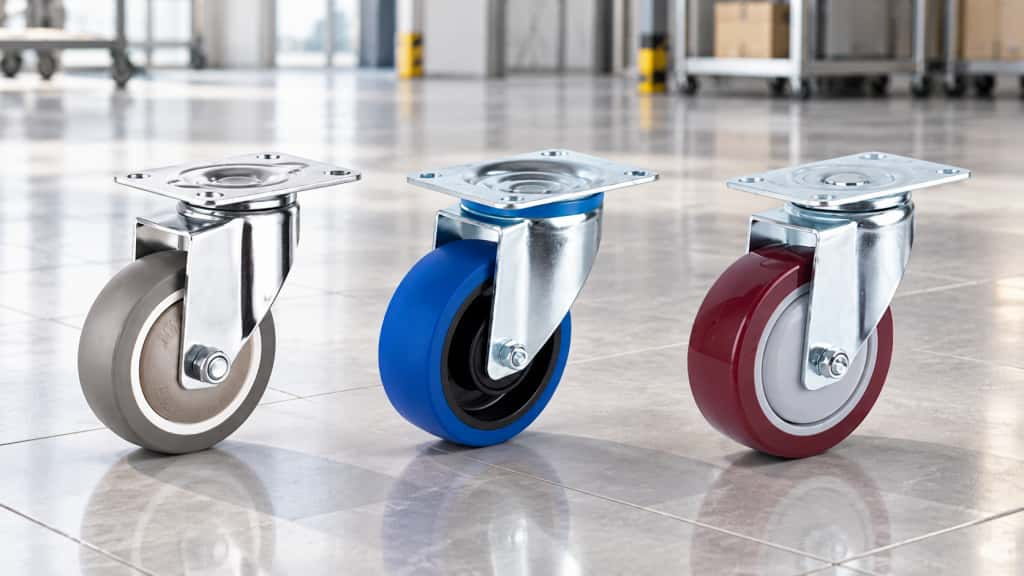
Dive Deeper: Characteristics and Applications of Soft Casters
When a client tells me they're installing new epoxy floors or moving sensitive equipment, soft casters are often the first solution I recommend. Their primary value proposition revolves around protection and comfort.
Material Composition
Soft casters derive their flexibility and floor-protective qualities from their material makeup:
- Rubber (Thermoplastic Rubber - TPR, or Solid Rubber): A classic choice for soft casters, rubber offers excellent grip, quiet operation, and good shock absorption. TPR is non-marking and generally better for indoor, lighter-duty applications, while solid rubber can handle heavier loads and may be more resistant to cuts.
- Polyurethane (PU): A highly versatile material that blends the durability of plastic with the elasticity of rubber. Polyurethane casters offer good load capacity, excellent floor protection, high abrasion resistance, and are often non-marking. They are a popular choice when a balance between hardness and softness is needed.
Performance Attributes
The inherent flexibility of these materials imparts distinct performance advantages:
- Floor Protection: This is the hallmark of soft casters. Their compliant surface conforms slightly to the floor, distributing weight over a larger area and significantly reducing the risk of scratches, dents, or scuffs on delicate surfaces like hardwood, tile, linoleum, or painted/epoxy floors. I’ve seen firsthand the damage a hard caster can inflict on a new floor, a costly mistake to rectify.
- Quiet Operation: The softer materials absorb impact and vibration, resulting in significantly quieter movement compared to hard casters. This is crucial for environments where noise reduction is paramount, such as hospitals, offices, libraries, or entertainment venues.
- Superior Grip and Traction: Soft casters, particularly rubber, provide excellent traction on smooth, hard surfaces. This improved grip can enhance control and maneuverability, especially on inclines or when stopping.
- Shock Absorption: The elasticity of soft caster materials acts as a buffer, absorbing shocks and vibrations that would otherwise be transmitted to the equipment or its contents. This is vital for moving fragile goods or sensitive electronic equipment.
Ideal Applications
My sales discussions often involve understanding the facility's specific floor type and whether noise or vibration is a concern. Soft casters are indispensable in certain settings:
- Finished and Delicate Floors: Offices, healthcare facilities, retail stores, food service establishments, and clean rooms with polished concrete, tile, hardwood, or epoxy floors are prime candidates for soft casters.
- Noise-Sensitive Environments: Hospitals, libraries, data centers, and corporate offices greatly benefit from the noise-reducing properties of soft casters, contributing to a more comfortable and productive atmosphere.
- Moving Fragile or Sensitive Equipment: For medical carts, IT equipment racks, laboratory instruments, or delicate display cases, the shock absorption of soft casters helps protect valuable contents from impact damage.
- Environments Requiring Enhanced Grip: On smooth, potentially slippery surfaces, the superior traction of rubber casters can be a safety advantage, providing more control during movement.
Potential Drawbacks
However, soft casters are not a universal solution. It's important to consider their limitations:
- Lower Load Capacity: Generally, soft casters cannot support as much weight as hard casters of the same size. Their material can compress or deform excessively under very heavy loads, leading to premature wear or decreased maneuverability.
- Higher Rolling Resistance: The deformation that provides floor protection also increases rolling resistance, meaning more effort is required to push equipment, especially with heavier loads.
- Susceptibility to Debris: Softer materials can pick up and embed small debris (metal shavings, gravel) more easily, which can then scratch floors. They can also be more susceptible to cuts and tears from sharp objects.
- Chemical and Oil Sensitivity: Some soft caster materials, especially certain types of rubber, may degrade when exposed to harsh chemicals, oils, or solvents, limiting their use in industrial wash-down or chemical processing areas.
By carefully weighing these advantages and disadvantages, you can make a strategic choice that aligns with your operational priorities.
Hard vs. Soft Casters: Understanding the Materials?
Many of my customers initially focus on the "hard" or "soft" label, but the real insights come from understanding the underlying materials. The choice isn't just about a binary category; it's about the nuanced properties of specific compounds.
The core difference between hard and soft casters lies in their material's durometer and composition, directly influencing their suitability for floor type, load capacity, noise reduction, and environmental resistance. Hard materials like nylon and phenolic offer superior load bearing and chemical resistance, while softer options like rubber and polyurethane prioritize floor protection and quiet operation.
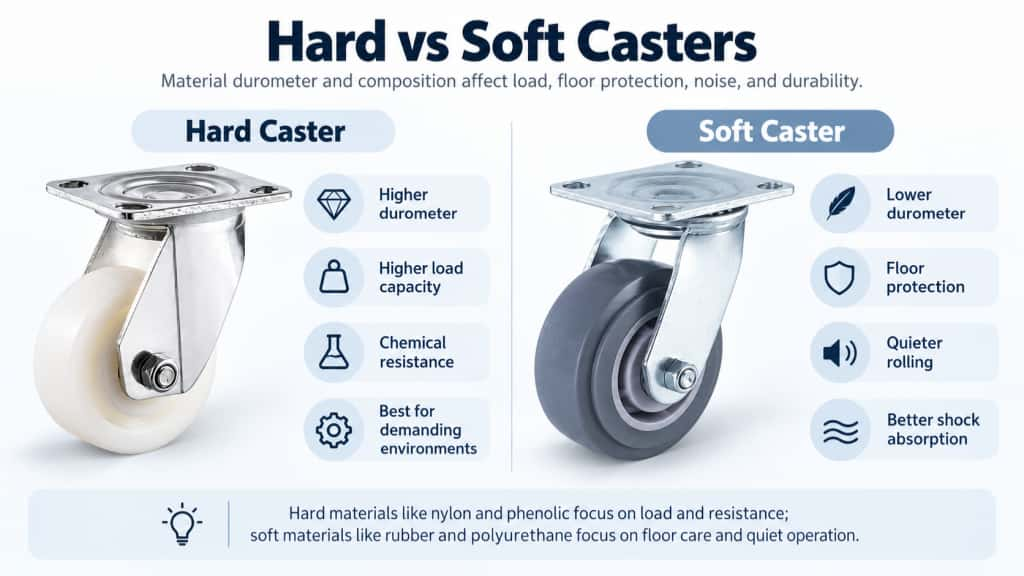
Dive Deeper: A Material-Specific Comparison
When we're discussing caster solutions with manufacturers or procurement teams, I often present a clear comparison of common materials. This helps demystify the choices and directly link material properties to practical outcomes.
Key Material Differences and Their Impact
Let's break down the most common materials used for both hard and soft casters, highlighting their critical distinctions:
| Feature / Material | Nylon | Phenolic | Polyurethane | Rubber (TPR/Solid) |
|---|---|---|---|---|
| Caster Type | Hard | Hard | Soft/Medium | Soft |
| Durometer (Shore D scale) | High (D70-D85) | High (D85-D95) | Medium (A85-A95) | Low (A65-A80) |
| Floor Protection | Poor | Poor | Excellent | Excellent |
| Load Capacity | Very High | Extremely High | High | Moderate |
| Noise Level | High | High | Low | Very Low |
| Rolling Resistance | Very Low | Very Low | Moderate | High |
| Shock Absorption | Poor | Poor | Good | Excellent |
| Chemical Resistance | Excellent | Excellent | Good | Fair (varies) |
| Temperature Range | -20°F to 180°F | -50°F to 300°F | -40°F to 180°F | -20°F to 160°F |
| Best For | Heavy loads, rough floors, chemicals | Extreme loads, high temp, concrete | Floor protection, quiet, medium-heavy loads | Floor protection, quiet, grip, light-medium loads |
| Common Uses | Warehouses, factories, concrete | Heavy machinery, ovens, automotive | Medical, retail, offices, food service | Hospitals, offices, light equipment |
Understanding Durometer and Its Implications
The durometer rating (Shore A for softer materials, Shore D for harder ones) is a direct indicator of a material's resistance to permanent indentation.
- High Durometer (Hard Casters): Materials like nylon and phenolic have high Shore D ratings. This means they are very rigid, offering minimal deflection under load. This rigidity is why they can carry heavy weights and have low rolling resistance. However, it also means they don't absorb shock well and can be abrasive against finished floors.
- Low Durometer (Soft Casters): Rubber and polyurethane fall into the Shore A range (or lower Shore D for harder polyurethanes). Their lower durometer allows them to deform slightly upon contact with a surface. This deformation is key to:
- Floor Protection: Spreading the contact pressure over a wider area.
- Shock Absorption: Damping impacts and vibrations.
- Traction: Increasing the friction between the wheel and the floor. The trade-off is often higher rolling resistance and a lower maximum load capacity before permanent deformation or damage to the wheel occurs.
Environmental Considerations Beyond Hardness
Beyond just the durometer, the chemical composition of the materials also dictates their performance in specific environments:
- Chemical Exposure: If your equipment operates in areas with oils, greases, cleaning agents, or mild acids, nylon and phenolic casters often provide superior resistance, preventing the material from degrading or becoming gummy. Polyurethane is also generally good, but rubber can be more susceptible to certain chemicals.
- Temperature Extremes: For applications involving high-temperature ovens or cold storage, phenolic casters stand out with their high heat tolerance. Standard rubber and even some polyurethanes can become brittle in cold or soften in heat.
- Debris and Floor Quality: In environments with metal shavings, gravel, or sharp objects, harder casters are less likely to embed debris. Soft casters, particularly rubber, can pick up and retain debris, which can then scratch clean floors. This is a common issue I discuss with manufacturing clients.
By systematically evaluating these material characteristics against your operational requirements, you can move beyond a simple "hard vs. soft" decision to a truly informed choice.
How to Choose the Right Casters?
Are you feeling overwhelmed by the myriad of caster options, unsure which type will truly meet your operational needs and protect your investment? Making the wrong selection can lead to costly floor repairs, equipment downtime, and safety hazards.
Choosing the right casters, whether hard or soft, involves a systematic evaluation of several critical factors: the floor surface, load capacity, operational environment, and desired performance characteristics like noise reduction or maneuverability. Prioritize these considerations to match the caster's material properties with your specific application.
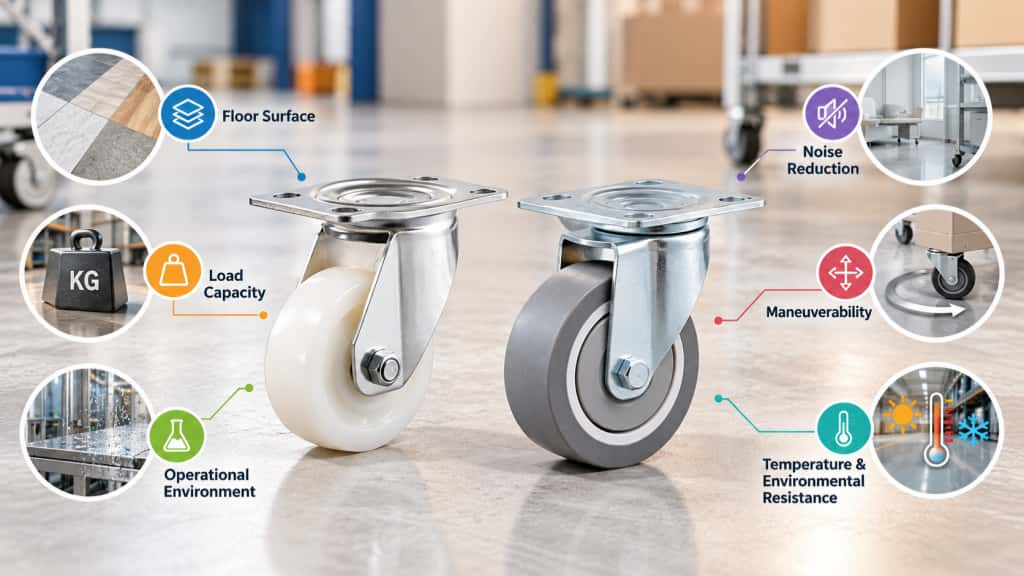
Dive Deeper: A Strategic Approach to Caster Selection
As a trade company specializing in caster solutions, we guide our customers through a structured evaluation process. There's no one-size-fits-all answer, and a holistic assessment ensures you avoid common pitfalls.
1. Analyze Your Floor Surface
This is often the first and most critical factor. The interaction between the caster wheel and the floor dictates wear, noise, and potential damage.
- Hard, Finished Floors (Epoxy, Tile, Hardwood, Laminate, Polished Concrete): These surfaces demand soft casters (polyurethane, TPR rubber) to prevent scratches, gouges, and maintain their appearance. The goal here is floor protection.
- Rough, Uneven, or Soft Floors (Raw Concrete, Asphalt, Carpet, Dirt, Grates): Hard casters (nylon, phenolic, cast iron) are generally preferred. Their rigidity allows them to roll over imperfections and prevents them from getting bogged down or permanently deforming on softer substrates.
- Floor Condition: Consider if the floor is always clean or if debris (metal shavings, gravel) is common. Soft casters can pick up and embed debris, turning them into abrasive tools against your floor. Hard casters are less prone to this.
2. Determine the Load Capacity
Accurately calculating the load capacity is paramount for safety and durability.
- Total Weight: Include the weight of the equipment itself plus the maximum load it will ever carry.
- Number of Casters: Divide the total weight by the number of casters. However, for safety, always assume that only three of the four casters will be bearing the load at any given time (due to uneven surfaces), so divide by three.1 This gives you the minimum required capacity per caster.
- Hard vs. Soft Impact: Hard casters generally offer higher load capacities for their size. If you have extremely heavy loads, you might be limited to harder materials or need larger casters, even on delicate floors, in which case a compromise (like a very hard polyurethane) might be necessary.
3. Evaluate the Operating Environment
Beyond just the floor, the ambient conditions significantly influence material choice.
- Temperature: Does the equipment operate in extreme heat (ovens, kilns) or cold (freezers, cold storage)? Phenolic casters are excellent for high heat, while certain polyurethanes and rubbers perform better in cold.
- Chemical Exposure: Are there oils, greases, solvents, acids, or cleaning solutions present? Nylon and phenolic are highly resistant. Certain rubbers can degrade quickly.
- Moisture/Wetness: Will the casters be exposed to water or steam (wash-down areas)? Stainless steel rigging with water-resistant wheel materials will be essential.
- Debris: As mentioned, if metal chips, glass, or other sharp objects are common, hard casters are generally more resilient to cuts and embedding debris.
4. Consider Noise and Vibration Control
This is a critical factor for many B2B clients, particularly in healthcare, office, or retail settings.
- Noise Reduction: Soft casters (rubber, polyurethane) significantly reduce operational noise, contributing to a more pleasant environment.
- Shock Absorption: If you're moving fragile, sensitive, or high-value items (e.g., medical equipment, IT servers, laboratory instruments), the shock-absorbing properties of soft casters are invaluable for protecting contents from impact. Hard casters transmit vibrations directly.
5. Prioritize Maneuverability and Rolling Resistance
How easily does the equipment need to be moved?
- Low Rolling Resistance: Hard casters, particularly nylon, offer the lowest rolling resistance, making it easier to push very heavy loads. This is key for efficiency in warehouses.
- Traction and Grip: Soft casters provide better traction, which is important on smooth or slightly inclined surfaces to prevent skidding.
6. Budget and Longevity
While often a concern, I always advise customers to consider the total cost of ownership, not just the initial purchase price.
- Initial Cost: Caster costs vary widely by material, size, and features.
- Replacement Costs: A cheaper, mismatched caster might wear out quickly, leading to higher long-term replacement and maintenance costs.
- Floor Damage Costs: The cost of repairing a damaged floor can far outweigh the savings from a cheaper, inappropriate caster.
By walking through these considerations with my clients, we systematically narrow down the options and confidently select the optimal hard or soft caster solution for their specific application. It's about matching the caster's inherent strengths to the demands of your environment and equipment.
Frequently Asked Questions
Do hard casters damage all types of floors?
Hard casters are more likely to damage delicate or finished floors like hardwood, tile, or epoxy, causing scratches, dents, or gouges. However, they are well-suited for durable surfaces like raw concrete or carpet, where floor protection is less of a concern.
Can soft casters handle heavy loads?
While soft casters generally have lower load capacities than hard casters of the same size, certain formulations, especially harder polyurethanes, can handle substantial loads. Always verify the caster's specific load rating against your equipment's total weight for safe operation.
Which caster type is quieter, hard or soft casters?
Soft casters are significantly quieter than hard casters. Their resilient materials absorb impacts and vibrations, reducing the noise produced during movement. This makes them ideal for noise-sensitive environments like offices, hospitals, or libraries.
Are there casters that offer both floor protection and high load capacity?
Yes, harder polyurethane casters are often an excellent compromise, offering good floor protection with significantly higher load capacities and better abrasion resistance than traditional rubber. These are a popular choice when you need a balance of both attributes.
How do I maintain hard and soft casters?
Regular maintenance for both hard and soft casters includes keeping the wheels and swivel bearings clean, checking for embedded debris, and inspecting for wear or damage. Lubricating swivel sections periodically can also extend their lifespan, ensuring smooth operation.
Conclusion
Understanding the fundamental difference between hard and soft casters is crucial for any business aiming to optimize operational efficiency, prevent costly floor damage, and ensure the longevity of their equipment. As we've explored, the distinction boils down to material science: hard casters like nylon and phenolic prioritize load capacity and durability on rough surfaces, while soft casters made of rubber or polyurethane excel at floor protection and noise reduction on delicate finishes. The best choice is always a contextual one, carefully aligning the caster's material properties with your specific floor type, load requirements, and environmental conditions.
We specialize in integrating quality caster factory resources to provide tailored solutions. If you're an equipment manufacturer, procurement manager, or facility operator looking for the right caster solution, contact us today. Let our expertise guide you in selecting the ideal hard and soft casters to meet your precise needs.
"How to Calculate Caster Load Capacity: A Step-by- ...", https://www.colsongroup.com/articles/how-to-calculate-caster-load-capacity/. Industry best practices and engineering recommendations for caster load capacity calculation often advise using a safety factor that assumes only three out of four casters are actively bearing the load at any given time, to account for uneven surfaces and dynamic conditions. Evidence role: expert_consensus; source type: institution. Supports: the safety guideline for calculating caster load capacity by assuming only three casters bear the load. ↩