Struggling to find the right caster? The wrong choice can damage floors or equipment. We can help you pick the perfect one for your specific needs.
The best type of caster is the one that perfectly matches your application. Factors like load, floor type, environment, and mounting are more important than finding one "all-purpose" caster. The right choice ensures safety, efficiency, and durability for your equipment.
I remember a client who almost made a costly mistake by focusing only on price. They learned that the "best" caster is about much more. Let's break down what you need to consider, so you can make the right choice every time. This guide will walk you through everything, step by step, to find the caster that is truly the best for you.
How do size and rollability affect your caster choice?
Are your carts hard to push? A small change in caster size can make a huge difference. Don't let poor rollability slow you down and hurt productivity.
Larger wheels roll more easily over obstacles and cracks and require less effort to start moving. Smaller wheels have a lower profile and are good for light loads on smooth surfaces. Always choose the largest diameter wheel that your equipment can accommodate for the best performance.
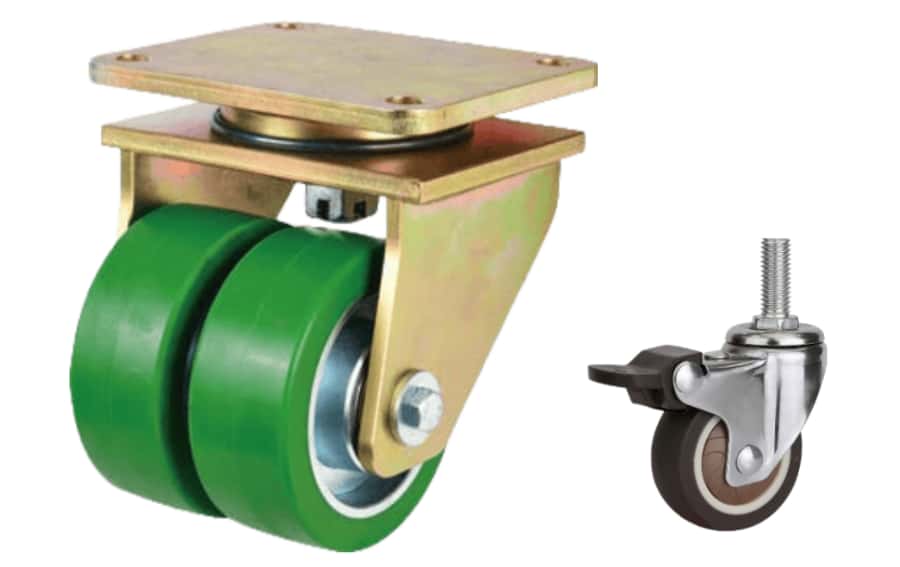
The general rule is simple: bigger is better. A larger wheel has an easier time rolling over cracks, thresholds, and debris. Think of it like a car tire hitting a small pothole versus a bicycle tire hitting the same pothole. The larger tire barely notices it. This same principle applies to casters. A larger diameter reduces the amount of force you need to push or pull the cart. This is called "rollability." Better rollability means less strain on your employees and faster movement of goods.
When I work with clients, we always look at their floor conditions.
| Floor Condition | Recommended Wheel Size | Why? |
|---|---|---|
| Smooth Concrete | 3-5 inches (75-125mm) | Small wheels are fine, but larger is still easier to push. |
| Rough Concrete / Asphalt | 5-8 inches (125-200mm) | Larger wheels bridge cracks and rough patches easily. |
| Carpeted Floors | 4-6 inches (100-150mm) | Helps roll over the soft surface with less effort. |
| Floors with Debris | 6 inches or more (150mm+) | Rolls over small obstacles instead of getting stuck. |
So, unless the overall height of your equipment is a major constraint, always opt for the largest wheel diameter possible. It's the simplest way to improve ergonomics and efficiency.
How do you understand your caster load capacities1?
Are you worried about your casters failing? Overloading is a common and dangerous problem. It can lead to equipment damage, accidents, and costly downtime.
To find the required load capacity per caster, add the total weight of your cart and its maximum load, then divide by a safety factor. Use 3 for a four-wheeled cart to account for uneven floors. This ensures each caster can handle the stress.
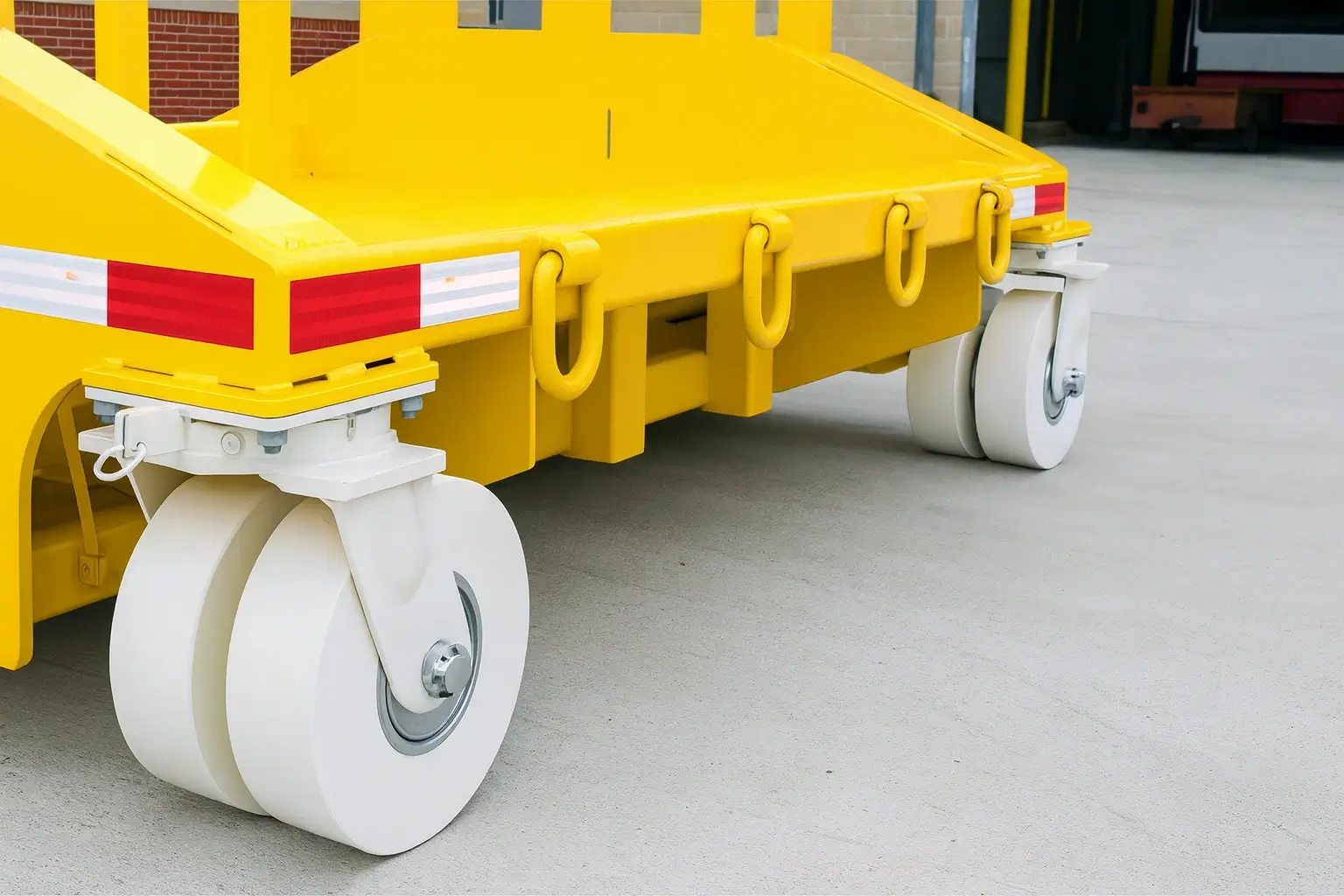
Calculating load capacity seems easy, but it’s a place where people often make mistakes. They simply divide the total weight by the number of casters. But floors are rarely perfectly flat. When a cart goes over an uneven surface, one wheel can lift off the ground. This means the other three, or even just two, casters must support the entire load. That is why we use a safety factor.
The formula is: (Weight of Cart + Maximum Load) / 3 = Required Capacity Per Caster (for a 4-wheel cart)
I once had a customer who needed casters for a heavy piece of machinery. They were focused only on finding a caster that met the load requirement. But their machine also had a low profile, and a standard heavy-duty caster would make it too tall and difficult for workers to operate. I showed them our low-profile casters. These casters have a very low installation height but can still handle heavy loads. They were perfect. The customer was so happy because we solved a problem they hadn't even fully considered. This shows that load capacity is critical, but it's just one piece of the puzzle. You must consider it along with other factors like overall height and usability.
How do you decide the type of wheel material for your operating conditions?
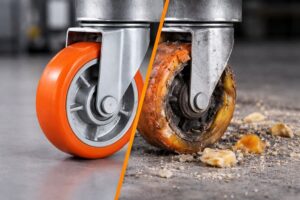
Choosing the wrong wheel material can ruin your floors or fail in specific environments. A caster that works great in a warehouse might be terrible in a hospital.
Match the wheel material to your floor type and environment. Use soft wheels like rubber or polyurethane to protect delicate floors. Use hard wheels like nylon or phenolic on rough surfaces or carpets. Special materials are available for high heat or anti-static needs.
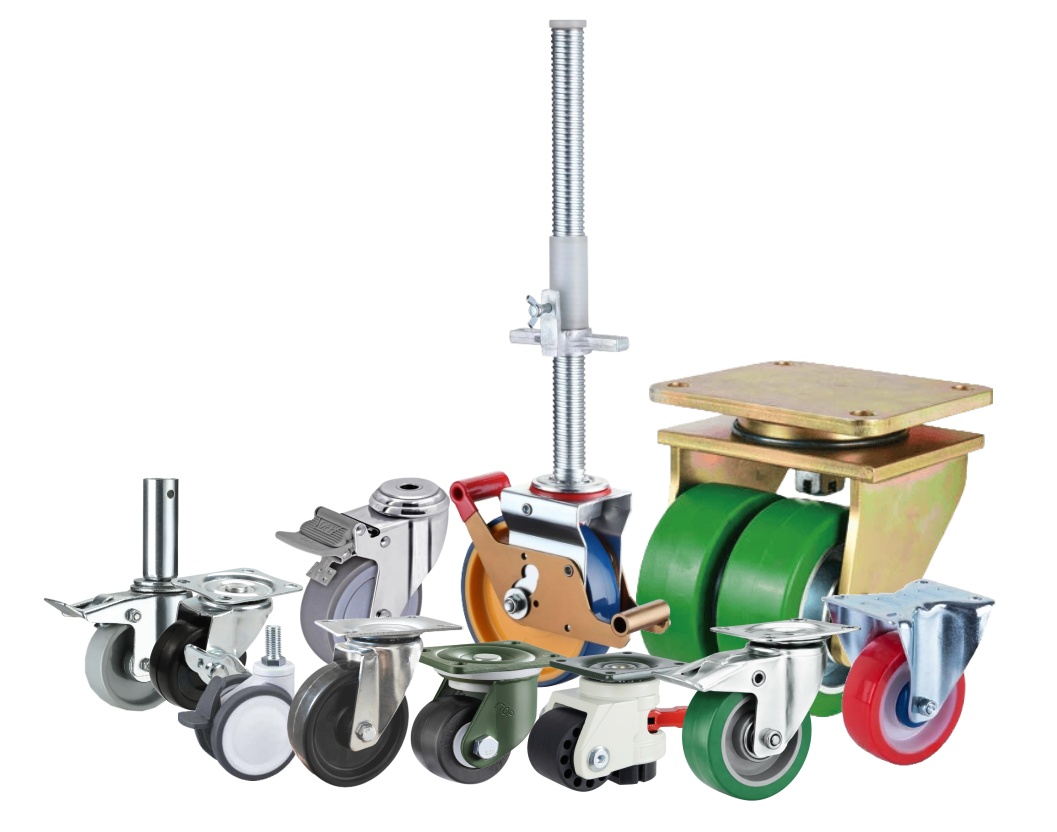
The interaction between the wheel and the floor is everything. You want a wheel that rolls smoothly, protects your floor, and lasts a long time. There is no single "best" material, only the best material for your specific situation. For example, if you need to protect expensive electronic components from static discharge, a standard caster is not enough. You need one made from a conductive material like our special conductive TPR. If your casters will be used in food processing ovens, you need a high-temperature wheel that won't melt or deform.
Here’s a quick guide to help you choose:
| Your Need | Best Wheel Material | Why? |
|---|---|---|
| Floor Protection | Polyurethane (PU), TPR, Soft Rubber | Soft materials absorb shock and won't scratch or mark floors. |
| Heavy Loads | Steel, Ductile Iron, Hard Polyurethane | These materials are strong and resist deforming under weight. |
| High Temperatures | Phenolic, Special high-temp materials | They are formulated to withstand heat without degrading. |
| Carpeted Surfaces | Hard Nylon, Polypropylene | Hard, narrow wheels cut through the carpet pile for easier rolling. |
| ESD Protection | Conductive TPR, Metal | These materials safely dissipate static electricity to the ground. |
Think about your workplace. What are the floors like? What is the temperature? Are there chemicals or debris? Answering these questions will lead you directly to the right wheel material.
Should you choose a plate-mount or stem-mount caster?
Picking the wrong mounting type can make installation a headache or even impossible. It’s important to know which type your equipment is designed for.
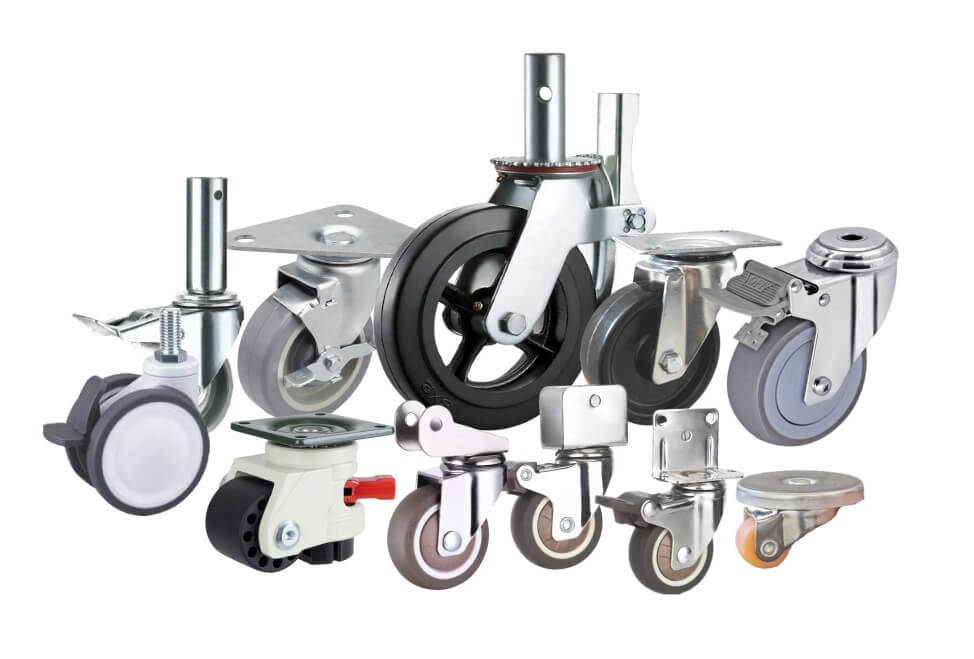
Plate-mount casters are best for heavy-duty applications and versatility, attaching with four bolts. Stem-mount casters are ideal for quick installation and are common on furniture, medical equipment, and tubular legs. The choice depends on your equipment's design and load.
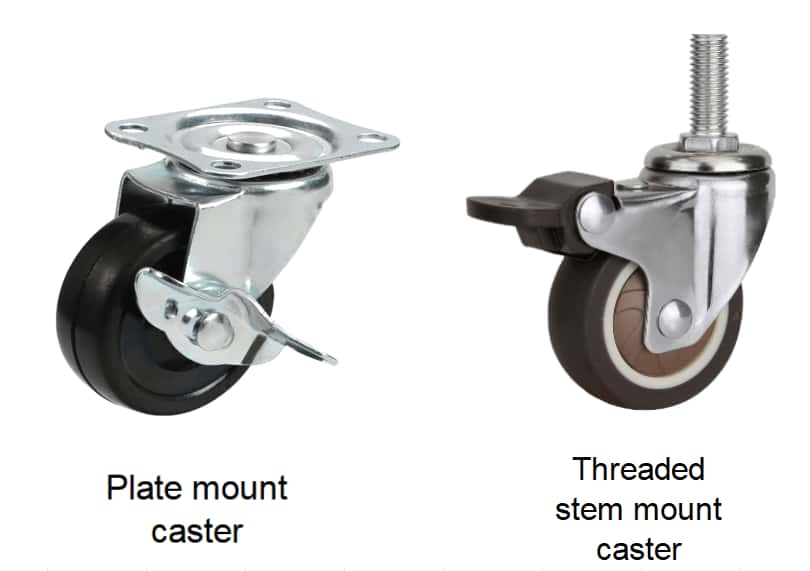
The mounting type is how the caster attaches to your cart or equipment. There are two main styles. A top plate caster has a flat plate, usually with four bolt holes. You simply bolt it onto a flat surface. This provides a very strong and stable connection, which is why it's the go-to choice for heavy industrial carts and workbenches. It distributes the load over a larger area.
A stem caster has a single stem that inserts into a hole or socket on the equipment. There are several types of stems. A grip ring stem has a small split ring that holds it in place with friction. A threaded stem screws into a threaded hole. A solid stem is often used in a hole drilled through a wooden leg. Stems are great for things with hollow legs, like office chairs or some store fixtures. They are generally easier and faster to install or replace. For our customers who are distributors, we make sure to offer a wide variety of both plate and stem casters so they can serve all their clients' needs.
Should you use rigid or swivel casters for steering?
Using the wrong combination of casters can make your cart impossible to steer or move in a straight line. This is a common and frustrating problem.
Use a combination of swivel and rigid casters for most carts. Swivel casters allow for 360-degree rotation for maneuverability, while rigid casters are fixed in a straight line for tracking and stability. The right mix depends on how you need to move.
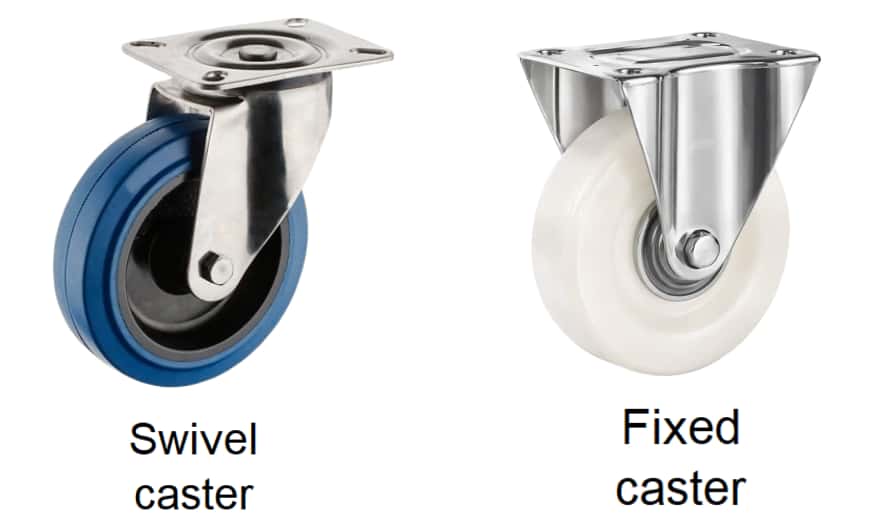
This is one of the most important decisions for how your cart will handle. A swivel caster has a bearing that lets the wheel pivot in any direction. This makes it easy to turn corners and maneuver in tight spaces. A rigid caster, also called a fixed caster, is locked in a single orientation. It can only roll forward and backward in a straight line. It provides stability and makes it easier to push a cart over long distances without it veering off course.
Most four-wheeled carts use a standard configuration. We usually recommend two swivel casters at the front (the end you push) and two rigid casters at the back. This combination gives you a good balance of steering control and straight-line tracking.
Here are some common configurations:
| Configuration | Diagram (S=Swivel, R=Rigid) | Best For |
|---|---|---|
| Standard | S-S-R-R | General purpose, good steering and tracking. |
| All Swivel | S-S-S-S | Maximum maneuverability in tight spaces. Hard to steer straight. |
| Diamond | S-R-R-S (center) | Can turn on its own axis. Good for long, narrow carts. |
| All Rigid | R-R-R-R | For moving in a straight line only, like on a track. |
Think about how you need your equipment to move. Does it need to navigate a crowded workshop or travel down a long hallway? The answer will tell you which combination of swivel and rigid casters is best.
What are the differences between wheel lock and total lock brakes?
Not all brakes are the same. A simple wheel brake might not be enough if you need your equipment to be completely stationary and safe.
A wheel lock brake presses against the wheel tread to stop it from rolling. A total lock brake not only stops the wheel from rolling but also locks the swivel mechanism, preventing the entire caster from rotating. Total locks provide maximum stability.
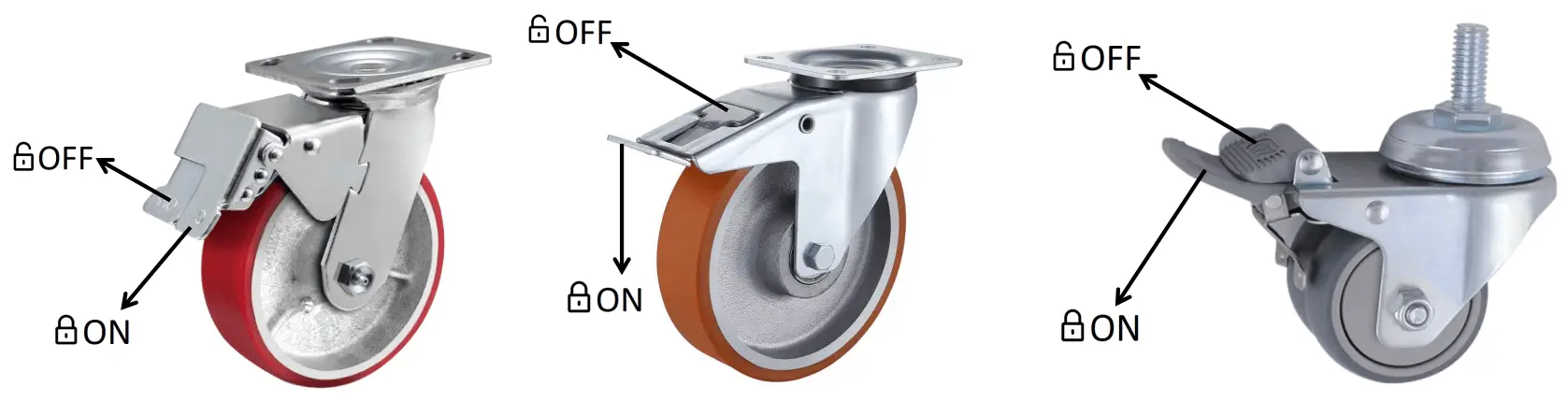
When you need a cart to stay put, you need a reliable brake. This is especially important for safety when loading and unloading or when working on an incline. The most common type is a wheel brake. It's a simple lever or pedal that applies pressure directly to the wheel's tread, stopping it from rotating. This is good for many situations, but it has a limitation. If it's on a swivel caster, the cart can still shift or wiggle as the swivel pivots.
For situations where you need absolute stability, a total lock brake is the best choice. When you engage a total lock, it does two things at once. First, it stops the wheel from rolling. Second, it locks the swivel bearing so the caster cannot pivot. This effectively turns a swivel caster into a rigid, unmoving support. It makes the cart or workbench incredibly stable. We see these used a lot on medical equipment, workbenches, and display racks, where any movement could be a problem. When we talk to our OEM clients, we always ask how stable the final product needs to be. This helps us recommend the right braking system for their design.
What are the differences between single-wheel, twin-wheel, and ball-wheel casters?
Are you trying to find a caster that looks good and works well? The type of wheel assembly can impact both the function and aesthetics of your equipment.
Single-wheel casters are the standard for industrial use, offering durability. Twin-wheel casters provide better load distribution and easier swiveling on soft surfaces like carpet. Ball-wheel casters offer a unique, modern look with multi-directional movement, best for light-duty furniture.
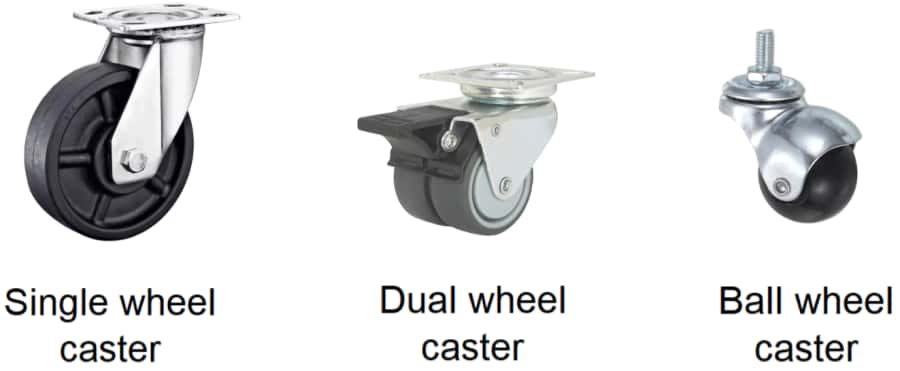
Most people are familiar with the standard single-wheel caster. It's a workhorse, simple and effective for a huge range of applications from light-duty to extra-heavy-duty. It's what you'll find on most industrial carts and equipment.
Twin-wheel casters, however, offer some unique advantages. By using two wheels side-by-side, they can distribute the load over a wider area. This is great for protecting floors. It also makes it easier to change direction because the two wheels can spin at different speeds, reducing friction when turning. This is why you see them on almost every office chair; they swivel very easily on carpet. We supply many twin-wheel casters to furniture and store fixture manufacturers.
Ball-wheel casters are more of a specialty item, often chosen for their design. Instead of a traditional wheel, they use a large sphere that can roll in any direction. They offer a very modern, sometimes futuristic, look. Functionally, they provide smooth, multi-directional rolling but are typically limited to lighter-duty applications like chairs, small tables, and retail displays. The choice here often comes down to balancing the functional needs with the desired aesthetic of the final product.
Conclusion
Choosing the best caster means matching its features to your specific job. Consider all factors, from load to floor type, for the perfect, most efficient, and safest fit.
Properly calculating load capacities prevents overloading and ensures the longevity of your equipment. ↩