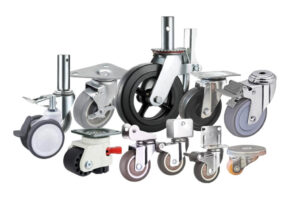

Choosing the right casters can be confusing. Making the wrong choice leads to damaged equipment or wheels that fail. This guide will help you select the perfect outdoor caster material.
Polyurethane (PU) is often the best all-around material for outdoor casters due to its durability on rough surfaces. However, rubber, pneumatic, cast iron, and nylon wheels are also excellent choices, depending on the specific load, terrain, and environmental conditions of your application.
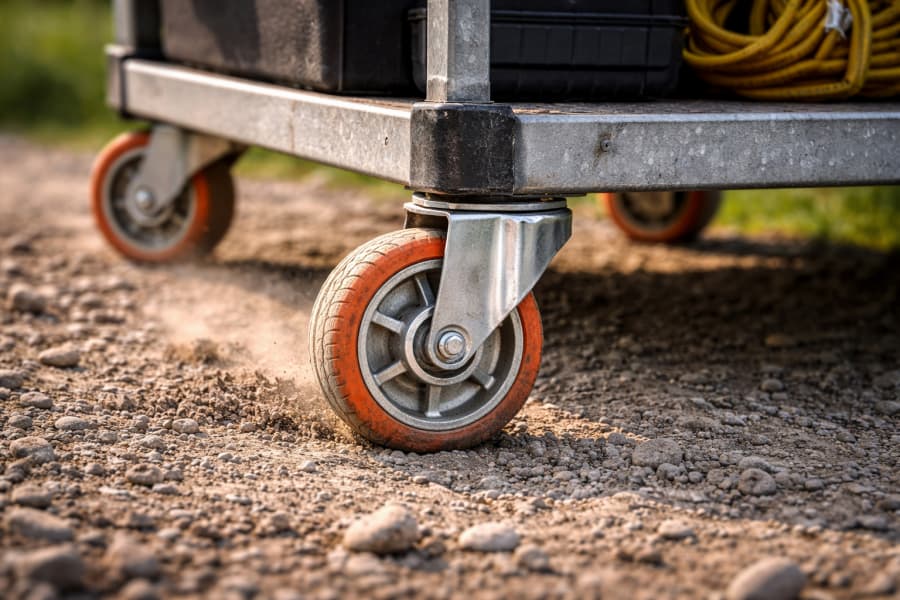
You might think any caster will work outside. But the truth is much more complex. Outdoor environments present unique challenges that can destroy a standard indoor caster in no time. Let's look at why using the right material is so important for performance, safety, and getting the best value for your money. We need to understand the job before we pick the tool.
Why Use Casters Outdoors?
Moving heavy items across outdoor terrain is exhausting. This manual effort is slow, tiring, and can even lead to injury. Casters make moving equipment, furniture, or supplies incredibly easy.
Casters are used outdoors to make heavy or bulky items mobile. This includes everything from garden carts and BBQ grills to industrial scaffolding. They save time, reduce physical strain, and improve workplace safety by allowing one person to move what might otherwise require several people.
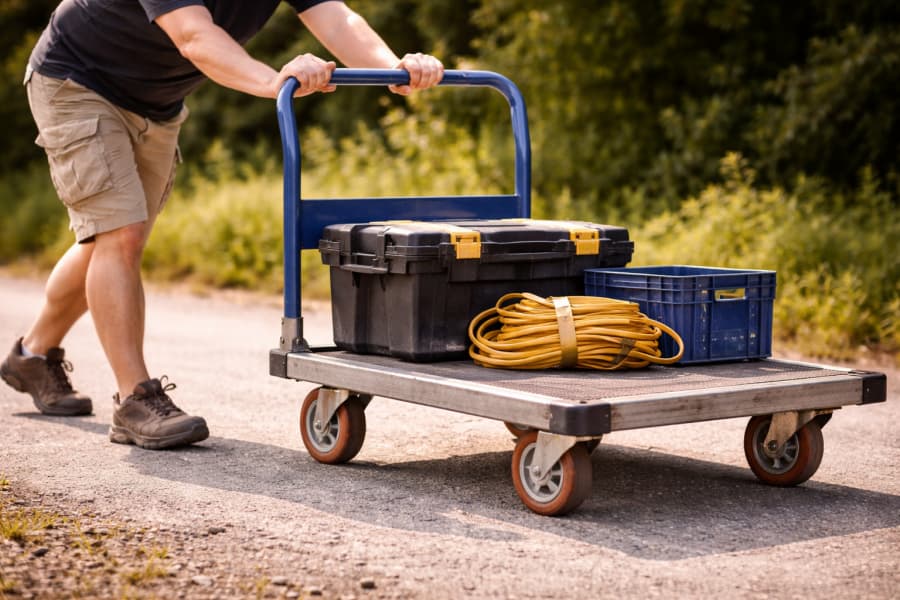
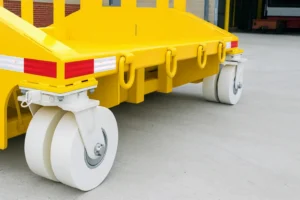
Over my 12 years in this business, I've seen casters completely change how work gets done outdoors. Think about a construction site. Workers need to move heavy scaffolding towers frequently. Without casters, this is a slow, difficult job requiring a whole team. With the right heavy-duty scaffolding casters, a single person can unlock the brakes and roll the tower to its new position in minutes. This is a huge boost in efficiency. The same principle applies to many other situations. We supply EN 840 compliant casters for large waste bins, allowing them to be moved effortlessly, even when full. The right casters turn a difficult task into a simple one.
Here are some common outdoor applications where casters make a big difference:
| Application | Primary Benefit of Using Casters |
|---|---|
| Garden Carts & Wheelbarrows | Easily transport soil, plants, and heavy tools across lawns and paths. |
| Industrial Waste Bins | Effortless transport to collection points, even with heavy loads. |
| Mobile Scaffolding | Quick and safe repositioning on job sites, increasing productivity. |
| BBQ Grills & Patio Furniture | Simple to move for cleaning, storage, or rearranging outdoor spaces. |
| Event Equipment (Stages, Speakers) | Fast setup and teardown for concerts, markets, and other events. |
Why Do Outdoor Applications Need Special Wheel Materials?
Imagine you put standard indoor casters on your new outdoor cart. After a few weeks, you notice they are cracked, stuck, and failing. Outdoor environments demand materials that can handle unique challenges.
Outdoor casters face rough surfaces, temperature swings, moisture, and UV light. Standard indoor materials can quickly degrade, crack, or wear out. Special materials are necessary for durability, safety, and a long service life in these tough conditions, preventing frequent and costly replacements.
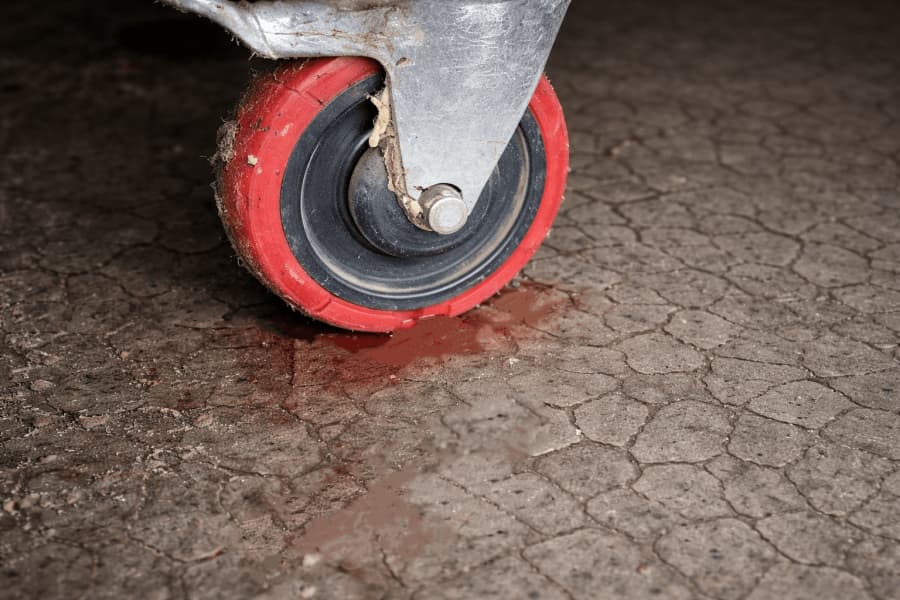
The difference between an indoor and outdoor environment is huge for a caster wheel. An indoor caster usually rolls on a smooth, clean, and dry floor in a stable temperature. An outdoor caster faces a much tougher reality. Let's break down these challenges.
The Challenge of Terrain
Outdoor surfaces are rarely smooth. Casters have to roll over concrete with cracks, rough asphalt, gravel, dirt, and grass. A hard, brittle material might crack or chip when it hits a rock. A material that is too soft will get punctured or wear down quickly on abrasive surfaces like concrete. The material must be tough enough to handle this constant abuse.
The Impact of Weather
Weather is another major factor.
- Moisture: Rain, puddles, and high humidity can cause metal parts, like bearings and forks, to rust and seize up. The wheel material itself must resist absorbing water, which can cause it to swell or break down.
- Temperature: A wheel might face freezing temperatures in the winter and intense heat in the summer. Some plastics become very brittle in the cold and can shatter on impact. Other materials can get too soft in the heat, leading to flat spots when left under a heavy load.
- Sunlight: UV radiation from the sun is very damaging to many plastics. It breaks down the material's structure, causing it to become brittle and lose its color and strength over time.
This table clearly shows the different demands:
| Factor | Indoor Environment | Outdoor Environment |
|---|---|---|
| Surface | Smooth, clean, predictable | Rough, uneven, full of debris |
| Moisture | Controlled and dry | Rain, humidity, puddles |
| Temperature | Stable and moderate | Extreme heat and cold swings |
| UV Exposure | Minimal to none | Constant and direct |
What Are the Best Materials for Outdoor Trolley Wheels?
You know you need special outdoor casters. But the long list of available materials can be confusing. Let's break down the top choices and their benefits in a simple way.
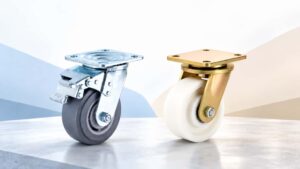
Polyurethane (PU) is a top all-around choice for its durability and smooth ride on rough ground. Rubber and pneumatic wheels are great for shock absorption. Cast iron is extremely durable for heavy loads, and nylon offers excellent resistance to chemicals and water.
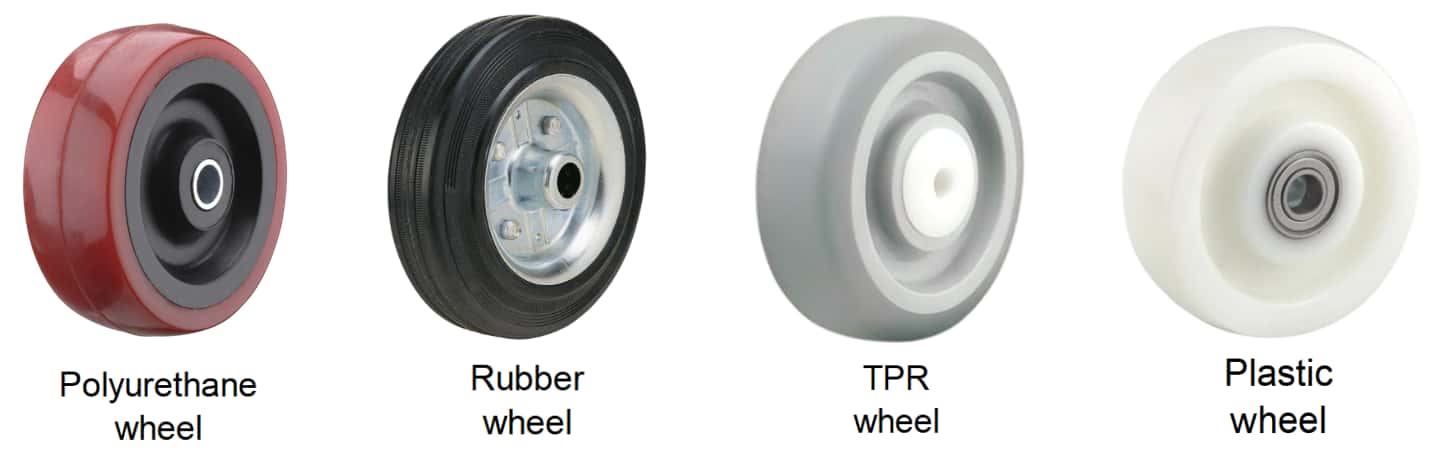
Choosing the best material depends on your specific job. There is no single "perfect" material for every outdoor use. Based on our experience, here is a deeper look at the most common and effective options we provide to our clients, from DIY chain stores to industrial manufacturers.
Polyurethane (PU): The All-Rounder
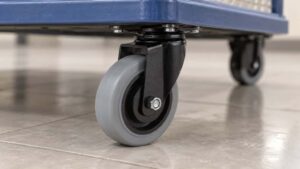
PU is often our first recommendation for general outdoor use. It combines the durability of a hard plastic with the elasticity and quiet ride of rubber. It rolls easily over small obstacles and cracks without causing a lot of vibration. It also has great resistance to abrasion, meaning it won't wear down quickly on rough concrete.
Rubber (Pneumatic & Solid): The Shock Absorber
- Pneumatic wheels are filled with air, just like a bicycle tire. They provide the best possible shock absorption, making them perfect for moving fragile items over very rough terrain. The main downside is that they can get punctures and require air pressure maintenance.
- Solid rubber wheels offer good shock absorption without the risk of going flat. They are a great maintenance-free choice for many applications, though they don't cushion the ride quite as well as pneumatic wheels.
Nylon: The Tough & Resistant Choice
We often see professional movers and workers using carts with nylon wheels. Nylon is incredibly durable and has a high load capacity. It's also very resistant to water, oils, and many chemicals, making it great for industrial environments. The trade-off is that nylon is very hard. This makes it noisy on rough surfaces and it doesn't provide any shock absorption, so the ride can be bumpy. Still, for its durability and resistance, it remains a popular choice.
Cast Iron: The Heavy-Duty Hero
When you need to move extremely heavy loads, cast iron is the answer. These wheels can handle thousands of pounds. They are incredibly durable and will roll over almost anything. However, they are very noisy, can damage floors, and offer zero shock absorption. They are best for heavy industrial use on surfaces where floor protection isn't a concern.
| Material | Best For | Pros | Cons |
|---|---|---|---|
| Polyurethane (PU) | General outdoor use | Durable, quiet, good on rough surfaces | Can be more expensive than rubber |
| Pneumatic Rubber | Fragile loads, very uneven ground | Excellent shock absorption, quiet | Can go flat, requires maintenance |
| Solid Rubber | General use, maintenance-free | Good shock absorption, durable | Can develop flat spots under load |
| Nylon | Wet or chemical environments | High load capacity, very durable, lightweight | Noisy, bumpy ride, no shock absorption |
| Cast Iron | Extremely heavy loads | Highest load capacity, very durable | Very noisy, can damage floors, heavy |
What Are the Steps to Choose the Right Outdoor Trolley Wheels?
You now have a list of good material options. But picking the wrong one from that list can still be a costly mistake. Follow these simple steps to ensure you select the perfect wheel.
First, determine your total load capacity. Second, consider the ground surface. Next, think about environmental factors like cost versus value. Finally, decide on the wheel size. These steps ensure you choose a caster that is safe, durable, and performs well for your needs.
Choosing the right caster is a methodical process. If you skip a step, you might end up with a product that fails. Here is the process we walk our customers through, whether they are a large retailer or a specialty equipment manufacturer.
Step 1: Calculate Your Load Capacity
This is the most important step for safety. You need to know the maximum weight the casters will support. Use this formula: (Weight of the empty cart + Maximum weight of the load) / 3. We divide by three, not four, because on uneven outdoor ground, one wheel may lift off the surface, forcing the other three to carry the entire load. Always choose a caster with a load rating that meets or exceeds this number.
Step 2: Analyze the Terrain
Where will the cart be used? On a relatively smooth concrete path? Or across a bumpy lawn and gravel driveway?
- For smoother surfaces, a harder wheel like nylon or polyurethane works well.
- For rough, mixed terrain, a softer wheel that provides shock absorption, like solid rubber or pneumatic, is a much better choice.
Step 3: Consider Cost vs. Long-Term Value
It can be tempting to choose the cheapest option. However, this often costs more in the long run. I remember a client who wanted to save a little money on a large order of utility carts. They chose Polypropylene (PP) wheels instead of the nylon we recommended. The initial invoice was lower, which they liked. But PP is not as impact-resistant as nylon. The wheels started cracking and failing within months of outdoor use. They had to deal with customer complaints and spend more money on frequent replacements. This experience taught us a valuable lesson we share with all our customers: always prioritize the right material for the application over a small initial saving. The total cost of ownership is what truly matters.
Step 4: Check for Industry Standards
For commercial or industrial use, make sure the casters comply with relevant safety and quality standards. As an exporter, we ensure our casters meet international standards like Europe's EN series (e.g., EN12532, EN840) and America's ANSI standards. This guarantees you are getting a product that is tested and proven to be safe and reliable for its intended purpose.
What is the Best Wheel Setup for Outdoor Trolleys?
You have finally chosen the perfect wheels. But if you mount them in the wrong configuration, the trolley can be very difficult to steer. Let's look at the most common and effective setups.
The most common and versatile setup is two swivel casters at the front (the push-handle end) and two rigid casters at the back. This configuration provides a good balance of easy steering and straight-line stability, making it ideal for most outdoor carts and trolleys.

The way you arrange the casters on your cart is just as important as the wheels themselves. The configuration determines how the cart steers, how stable it is, and how easy it is to handle. Here are the three most common setups we recommend to our customers.
Two Swivel, Two Rigid: The Standard
This is the classic setup for a reason. Placing two swivel casters at the end where you push or pull gives you excellent steering control. The two rigid (or fixed) casters at the other end act like a rudder, keeping the cart tracking in a straight line when you push it forward. This prevents the cart from wandering or being difficult to control over long distances. It's the best all-around choice for general-purpose platform carts, utility carts, and trolleys.
Four Swivel Casters: Maximum Maneuverability
If your cart will be used primarily in tight, confined spaces, a four-swivel setup is a great option. It allows the cart to be moved in any direction—forward, backward, sideways—and to be spun in place. This is great for navigating crowded workshops or warehouses. The main drawback is that it can be difficult to control in a straight line over a longer distance. For this reason, many of our customers opt for swivel casters that have swivel locks. This allows you to lock two of the casters in a fixed position, temporarily turning them into rigid casters for better straight-line travel.
Diamond Pattern: For Long Carts
For very long, narrow carts, like some material handling carts in lumber yards, a diamond pattern is effective. This involves placing two rigid casters in the center of the cart's long sides and one swivel caster at the center of each end. This setup allows the cart to pivot on its central axis, making it much easier to turn sharp corners.
| Configuration | Steering | Stability | Best Use Case |
|---|---|---|---|
| 2 Swivel + 2 Rigid | Good | Excellent | General purpose carts, platform trucks |
| 4 Swivel | Excellent | Fair | Tight spaces, high maneuverability needed |
| Diamond Pattern | Pivots on center | Good | Long, narrow carts that need to turn corners |
Conclusion
Choosing the right outdoor caster material, like polyurethane or rubber, is vital. Always consider the load, terrain, and environment to ensure you get safe, long-lasting performance and true value.