
Your casters wear out too fast, costing you money and time. Don't let failing wheels halt your operations. Let's find a material that lasts and keeps you rolling.
For maximum durability under high loads, cast iron, steel, and stainless steel are top choices. They resist compression and wear exceptionally well. Phenolic and nylon also offer excellent longevity and are very hard-wearing, making them great for demanding industrial applications.
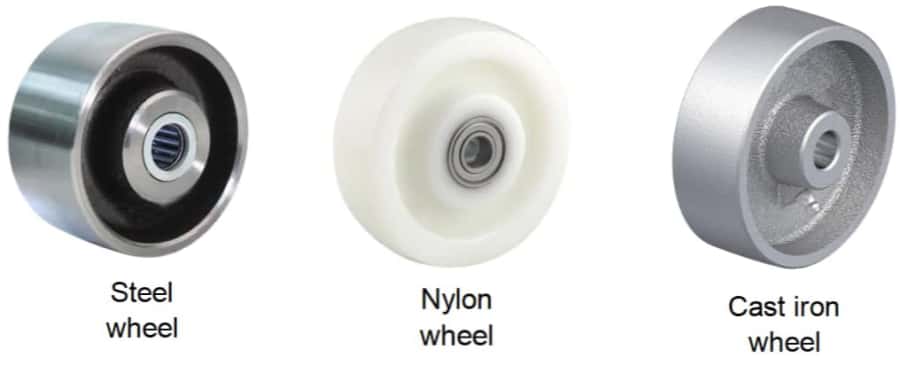
So, you know the toughest materials now. But durability isn't just about hardness. Sometimes, the "most durable" option isn't the right one for your specific needs. You need to think about your floors, your environment, and how you'll use the casters. Let's break down the options to help you make the best choice.
Caster Wheel Materials: A High-Level Comparison?
Confused by all the material options for caster wheels? Choosing the wrong one can damage your floors or fail under pressure. Here’s a simple comparison to clarify things.
Hard materials like steel and cast iron offer the highest load capacity and wear resistance. Softer materials like polyurethane (PU) and rubber provide better floor protection and a quieter ride. Nylon and phenolic offer a good balance of hardness and chemical resistance.
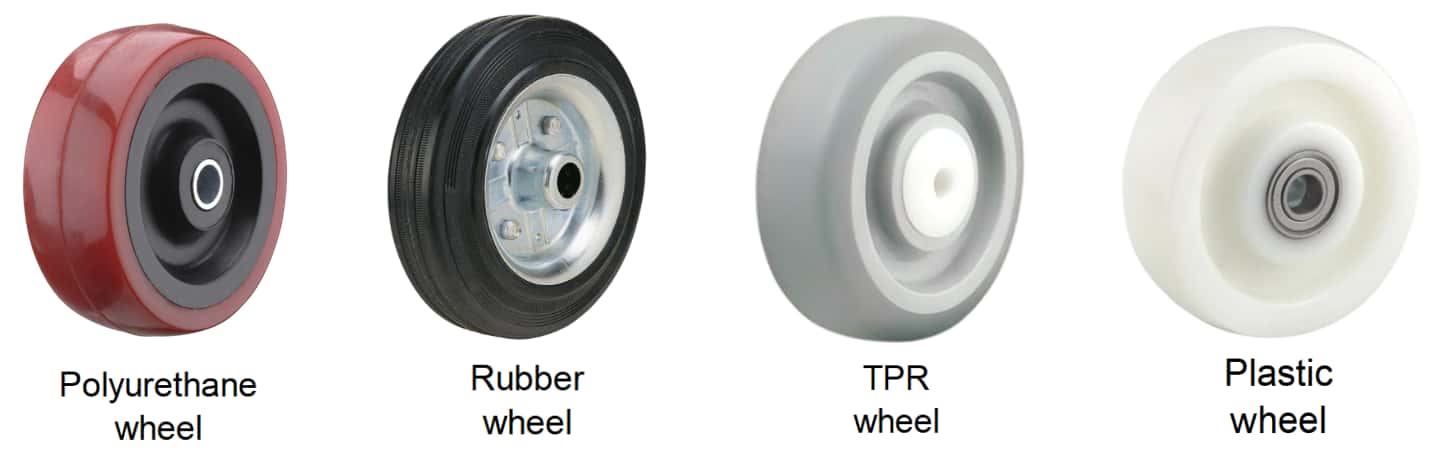
When I first started in this business 12 years ago, I thought "harder is always better." I learned that's not true after a client call I'll never forget. A warehouse manager had just installed a beautiful, expensive epoxy floor. He ordered our cast iron wheels for maximum durability on his heavy carts. A week later, he called me, furious. The floors were covered in cracks and gouges. He chose the most durable wheel, but it was the wrong wheel for his application.
The best material depends entirely on the job. Let's look at the key differences, especially hardness. We measure it using the Shore scale1. It's important to know there are different scales, mainly Shore A for softer materials and Shore D for harder ones. They don't overlap; a high number on the 'A' scale is still softer than a low number on the 'D' scale.
| Material | Typical Hardness | Key Benefit | Best For |
|---|---|---|---|
| Cast Iron / Steel | 65+ Shore D | Maximum Load Capacity | Heavy machinery, static loads on concrete |
| Phenolic | 90 Shore D | High Load & Temp | General industrial, workshops |
| Nylon | 70 Shore D | Wear & Chemical Resistance | Manufacturing, clean rooms |
| Polyurethane (PU) | 73-98 Shore A | Floor Protection, Quiet | Hospitals, retail, delicate floors |
As you can see, a "hard" PU wheel at 98 Shore A is still much softer and more forgiving on floors than a "soft" nylon wheel at 70 Shore D. Understanding this distinction is the first step to avoiding costly mistakes like my client's.
Choosing the Right Material: Factors to Consider?
Knowing the materials is half the battle. But how do you choose the perfect one for your equipment? Making a mistake here can be costly and lead to operational downtime.
Consider your load capacity, floor type, and environment. For heavy loads on concrete, steel is great. For delicate floors, polyurethane is better. Also, think about exposure to chemicals, water, or extreme temperatures, as these factors will narrow down your best material choice.
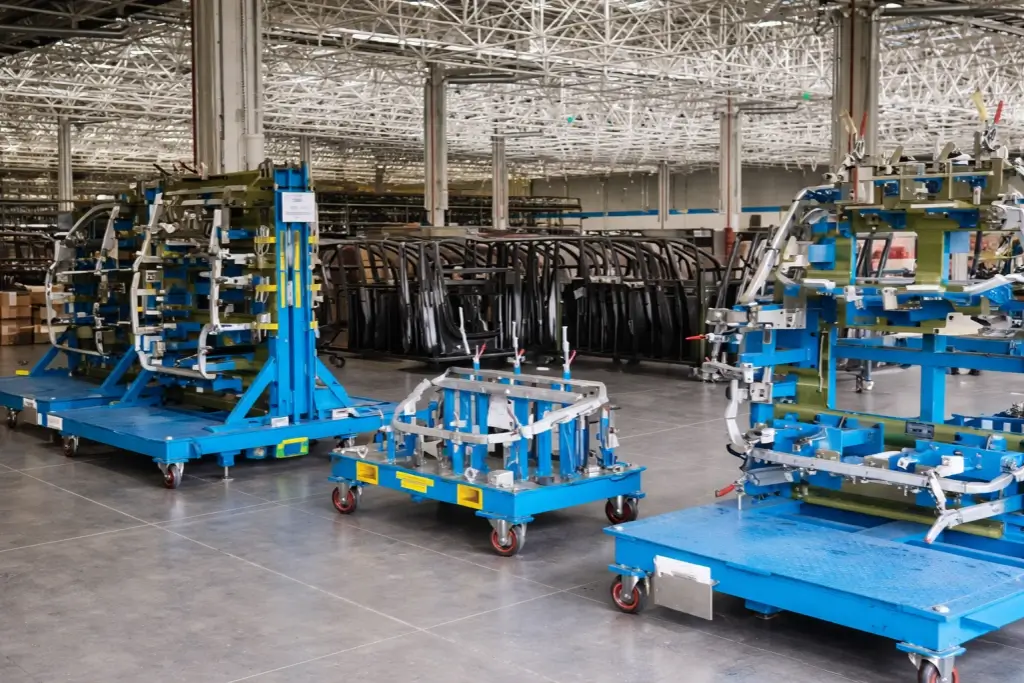
The biggest factor that surprises my clients is floor protection. But beyond that, you must think about the complete picture of how the caster will be used.
Load Capacity: Static vs. Dynamic
Is your equipment going to sit in one place most of the time (static load), or will it be moved frequently (dynamic load)? Materials like cast iron excel under heavy static loads but can be brutal on floors when moved. For dynamic loads, you need a wheel that can handle the stress of movement, rolling over debris, and potential impacts. This is where high-quality polyurethane (PU) or nylon wheels often perform better. They absorb some of the shock and are more resilient.
The PU Hydrolysis Myth
Many people worry that PU will break down from moisture, a process called hydrolysis. It's a valid concern, especially for polyester-based PU. However, for demanding applications, we use a higher grade of polyether-based PU. This material is far more resistant to hydrolysis. I've learned from our customers that PU wheels that are used regularly also last longer. The constant movement seems to prevent the material from breaking down. I spoke with a manager at a fabrication plant last week. He confirmed their carts are still using our PU casters perfectly after 14 months of daily use. It really comes down to choosing the right type of PU for the job.
Specialty Materials for Unique Environments?
Working in extreme heat, a static-sensitive area, or a place with strict hygiene rules? A standard caster will fail, causing major problems and potential compliance issues.
For high-heat environments like bakeries, use phenolic or special high-temp nylon. For electronics manufacturing, anti-static or conductive wheels are essential. In food or medical settings, stainless steel casters are a must for hygiene and corrosion resistance.
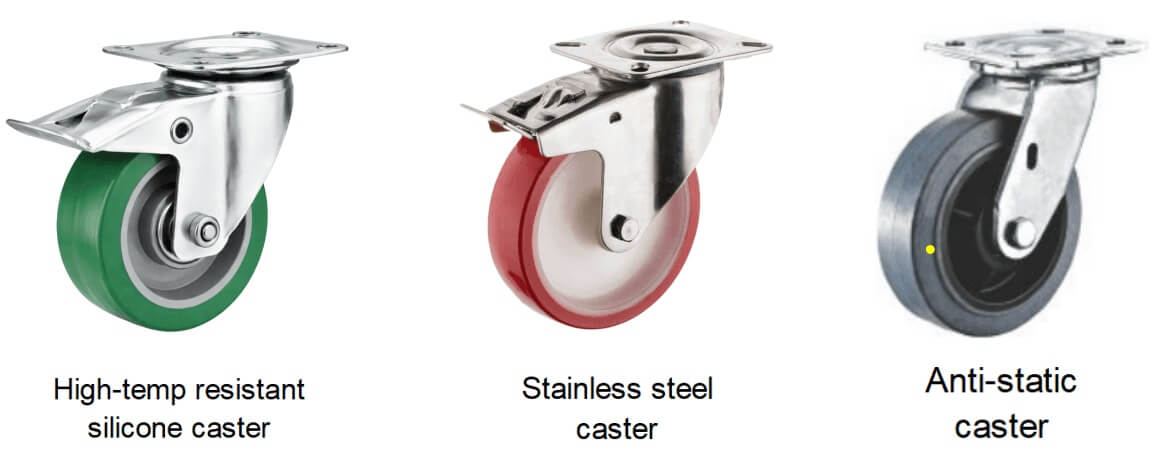
Over my 12 years of exporting casters, I've seen that many of our clients aren't just looking for a standard wheel. They are terminal equipment manufacturers who need a very specific solution. Their reputation depends on the reliability of every single component, including the casters.
High-Temperature Environments
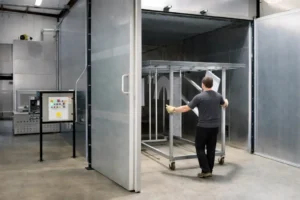
Think of industrial autoclaves or bakeries with large rack ovens. A standard wheel would melt or seize up. For these situations, we provide specialty high-temp phenolic or glass-filled nylon wheels. These are engineered to perform flawlessly in continuous temperatures up to 250°C (482°F). They ensure our clients' equipment works without failure.
Static-Sensitive Areas2
In an electronics assembly plant, a tiny spark from static electricity can destroy a whole batch of sensitive microchips. We supply anti-static (ESD) and conductive casters that prevent this.
- Anti-static (ESD) wheels have a resistance of 10^6 to 10^9 ohms, allowing static to dissipate slowly and safely.
- Conductive wheels3 have a resistance of less than 10^5 ohms, for when you need to ground a cart very quickly. Choosing the right one is critical for our clients in the electronics industry.
Hygiene and Corrosion Resistance4
For our customers in the food and medical industries, equipment must be sterile and able to withstand harsh chemical washdowns. Rust is not an option. Here, we provide casters made entirely from 304-grade stainless steel. This material offers excellent resistance to corrosion and rust, ensuring our clients meet strict FDA standard. It's this ability to provide certified, industry-specific solutions that our manufacturing partners value most.
Conclusion
The most durable caster isn't always the hardest. The best choice balances load capacity, floor protection, and your specific work environment. Choose wisely to ensure long-lasting, reliable performance.
Understanding the Shore scale helps in selecting the right caster wheel material based on hardness, ensuring compatibility with your application. ↩
Selecting anti-static or conductive caster wheels is crucial for preventing damage in electronics manufacturing and assembly plants. ↩
Conductive wheels quickly ground carts, preventing static discharge in environments where rapid grounding is essential for safety. ↩
Stainless steel casters offer excellent resistance to corrosion, making them ideal for food and medical industries where hygiene is critical. ↩