Choosing the wrong caster can damage your floors or equipment. It's frustrating when a simple component causes big problems. We can help you understand the classifications.
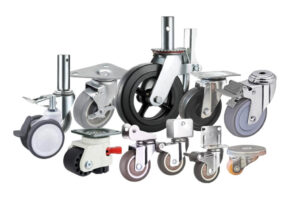
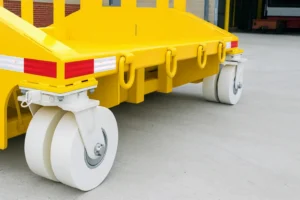
Caster wheels are classified by function, mounting method, load capacity1, wheel material2, and specific application. Understanding these categories helps you select the perfect caster for safety, performance, and durability.
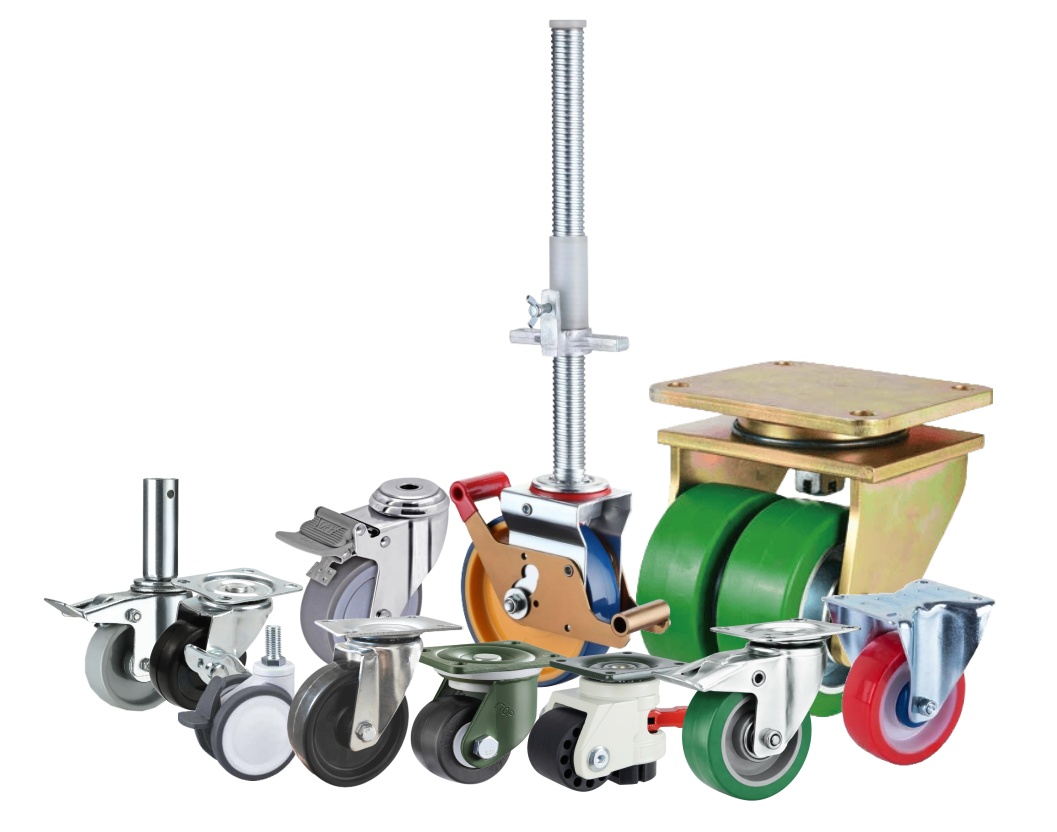
It seems simple, but a caster is a complex component with many variations. I've been in this business for over 12 years, and I've seen how the right choice can make all the difference. Let's break down these classifications so you can choose with confidence. Knowing these details will help you find the perfect match for your project.
How Do Caster Functions Affect Your Choice?
Your cart rolls away or won't steer properly. This lack of control is inefficient and unsafe. A caster with the right brake or lock function solves this instantly.
Casters have functions like wheel brakes to stop rolling, total-lock brakes to stop rolling and swiveling, and directional locks to fix the swivel. Central locking systems offer all these functions.
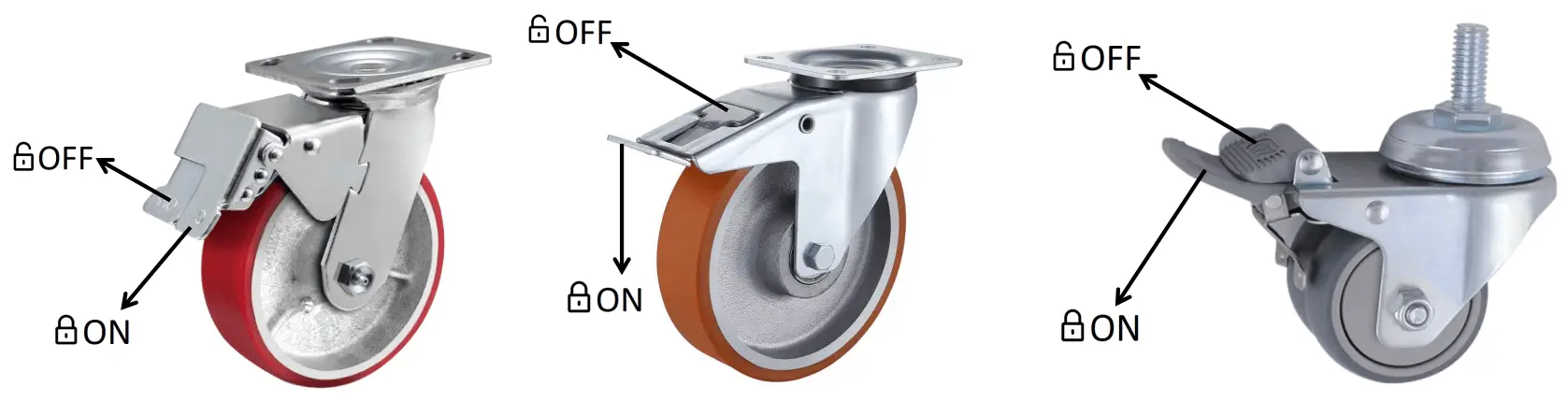

Brakes and locks are not just add-ons; they are essential functions. They determine how you control your equipment. For example, a simple brake might stop a cart from rolling away, but a more advanced lock is needed for true stability and safety. Let's look at the main types you'll encounter.
Common Brake and Lock Functions
| Function Type | Description | Best For |
|---|---|---|
| Wheel Brake | A simple brake that presses against the wheel tread, stopping it from rolling. The swivel housing can still rotate. | Preventing a cart from rolling away on a flat surface. |
| Total-Lock Brake | This is the most common and effective brake. It locks both the wheel from rolling and the swivel from turning. | Securing equipment completely in place, essential for safety. |
| Directional-Lock | Also called a swivel-lock. It doesn't stop the wheel from rolling. Instead, it locks the swivel, turning a swivel caster into a rigid one. | Steering long carts in a straight line, improving maneuverability. |
For specialized industries, like medical, casters can be even more advanced. I've supplied central locking casters for hospital beds. A single pedal can switch the entire bed between free movement, directional lock, or a total lock. This level of control is critical in a hospital environment.
What Mounting Method Fits Your Equipment?
You found the perfect caster, but it won't attach to your equipment. This is a common and frustrating setback. Let's ensure you get the mounting right from the start.
Common mounting methods include top plate, stem (threaded or solid), and bolt hole. There are also special brackets like triangle-shaped, round shaped, U-shaped or L-shaped for unique attachments, ensuring a secure fit.
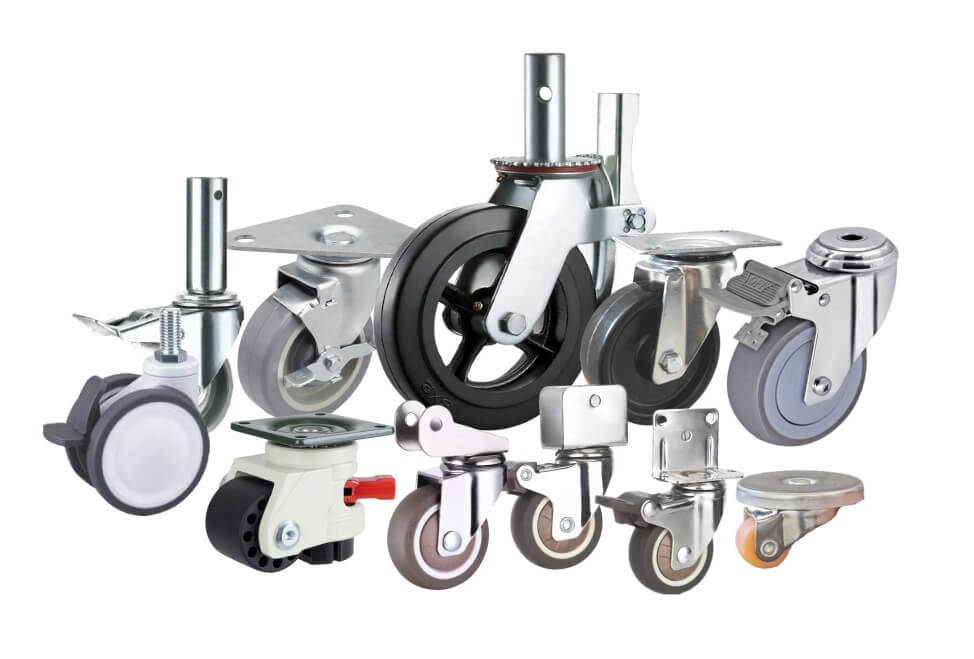
How a caster attaches to your product is as important as the wheel itself. A weak connection will fail, no matter how good the caster is. As a company that deals with customers from retail to heavy industry, we offer a wide range of mounting options to ensure a secure fit for any design.
Plate Mounts
Top plate mounts are very common and provide a strong, stable base. They are attached with four bolts. While most are rectangular, we also see square top plates, which are common in Japanese industrial designs. We can even provide triangular, circular, or fully custom plate shapes to fit specific equipment footprints.
Stem and Other Mounts
Stem casters are used when a plate is not practical, like on office chairs or equipment with tubular legs.
- Threaded Stem: Screws into a matching threaded hole.
- Solid Stem / Grip Ring Stem: Pushes into a socket. A friction ring holds it in place.
- Bolt Hole: A caster with a hole in the top for a bolt or a custom stem to pass through. This is very versatile.
- Special Brackets: We also offer L-shaped and U-shaped brackets for mounting casters to the side of wood panels or frames.
How Do You Determine the Right Load Capacity?
A collapsed cart and damaged goods are a nightmare. This often happens from underestimating load capacity. Calculating the right capacity is simple and prevents costly failures.
To find the required load capacity per caster, divide the total weight (cart + max load) by the number of casters you will use, usually minus one. This safety margin accounts for uneven floors.

Load capacity is the single most important factor for safety. Overloading a caster is the fastest way to cause a failure. The good news is that calculating what you need is straightforward and prevents accidents and damage.
The Load Capacity Formula
Here is the rule we always tell our clients for carts with four wheels: Required Capacity per Caster = (Total Weight of Equipment + Maximum Load) / 3 We use 3, even for a 4-caster cart. Why? Because floors are rarely perfectly flat. At any given moment, one wheel might be off the ground, forcing the other three to carry the entire load. This simple formula builds in a crucial safety factor.
Duty Ratings
We classify our casters into general duty ratings to make selection easier.
| Duty Rating | Load Capacity Range (per caster) |
|---|---|
| Light-Duty | 5 - 120 kg |
| Medium-Duty | 80 - 300 kg |
| Heavy-Duty | 200 - 1,000 kg |
| Extra Heavy-Duty | 1,000 - 35,000 kg (or more) |
Always choose a caster whose capacity is safely above your calculated requirement. It is a small extra cost for a huge gain in safety and product lifespan.
Which Wheel Material is Best for Your Application?
Are your casters too noisy, marking up the floor, or wearing out too fast? The wheel material is likely the problem. Choosing the right material solves these issues.
Wheel materials like rubber are quiet and protect floors. Polyurethane (PU)3 offers high load capacity and wear resistance. Harder materials like nylon or steel are for heavy loads on smooth concrete.
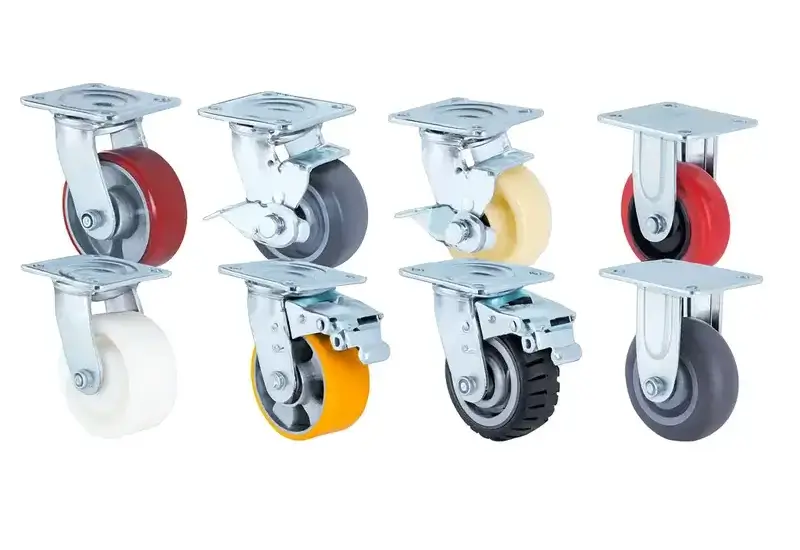
The material of the wheel's tread has a huge impact on performance. It affects everything from noise level to floor protection and durability. We can even adjust material formulas to meet specific needs. I remember a client who needed a caster for his project. PU wheels were durable enough, but they pushed his budget too high. Cheaper PP wheels were too hard and noisy on his facility's uneven floors. He was stuck. We worked with our engineers to develop a custom hybrid material. It had a hardness close to PU but wouldn't hydrolyze, and it saved him over 10% on cost. He was thrilled. This shows that the "best" material depends on your priorities.
Common Wheel Materials
| Material | Pros | Cons |
|---|---|---|
| Rubber | Quiet, good floor protection, shock absorbing. | Lower load capacity, can flat-spot. |
| Polyurethane (PU) | High load capacity, non-marking, wear resistant. | Higher cost, can hydrolyze in wet conditions. |
| Polypropylene (PP) | Low cost, high impact strength, chemical resistant. | Noisy, can damage floors. |
| Nylon4 | Very high load capacity, low rolling resistance. | Noisy, not for delicate floors. |
| Cast Iron/Steel | Highest load capacity, durable. | Very noisy, will damage most floors, can rust. |
Are There Casters Designed for Your Specific Industry?
Using a generic caster in a specialized environment can lead to quick failure. This downtime is costly. Specialized casters are designed to thrive in these tough conditions.
Yes, many casters are designed for specific applications. These include high-temperature resistant casters for bakeries, stainless steel casters for food processing, and anti-static casters for electronics manufacturing.
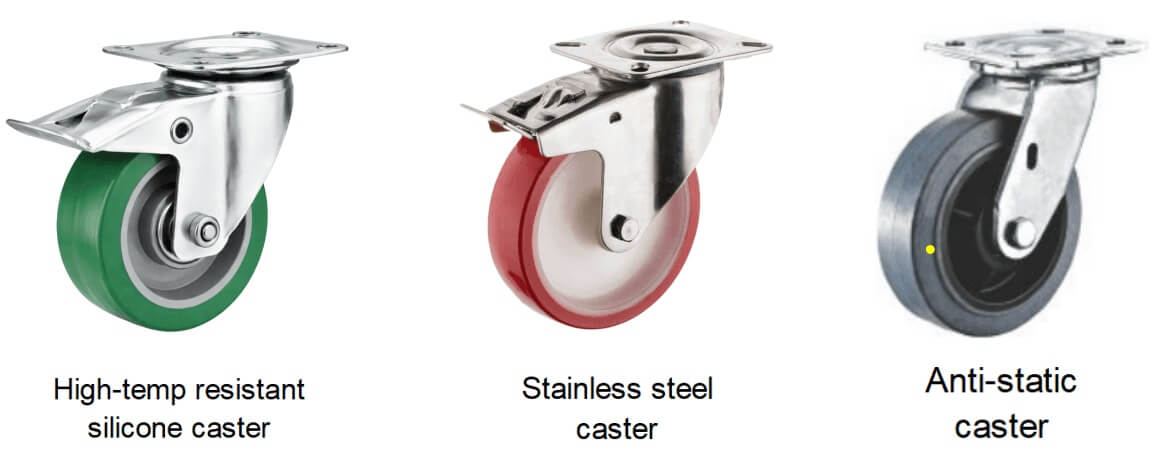
While many casters are for general use on carts, we also supply a huge range of casters built for specific jobs and industries. Using the right one is not just about performance, it's often a requirement for safety and compliance. For over a decade, we've helped clients find the exact caster for their unique environment, ensuring they meet standards like EN, ANSI, and RoHS.
Here are just a few examples of specialized, application-specific casters:
- Food & Medical: Stainless steel casters (conforming to EN 12530) resist rust and are easy to sanitize. We also offer anti-bacterial wheels for hospitals.
- High-Temp Environments: Casters for glass manufacturing or bakeries use special materials that won't melt or degrade in ovens.
- Electronics: Anti-static (ESD) and conductive casters safely discharge static electricity to protect sensitive components.
- Construction: Scaffold casters (meeting EN 1004) have heavy-duty brakes and specific dimensions for safety on job sites.
- Logistics & Automation: We have casters designed for the high-speed, continuous use of AGVs and AMRs.
- Waste Management: Our garbage bin casters are durable and meet EN 840 standards.
If you have a unique challenge, there is likely a caster designed for it.
What Is a Caster Pattern and Why Does It Matter?
Your cart is hard to steer or drifts to the side. This makes moving heavy loads difficult. The problem might be your caster pattern, a simple but crucial detail.
Caster pattern is the arrangement of swivel and rigid casters on your equipment. The right pattern dramatically improves steering, stability, and maneuverability for different types of loads and spaces.
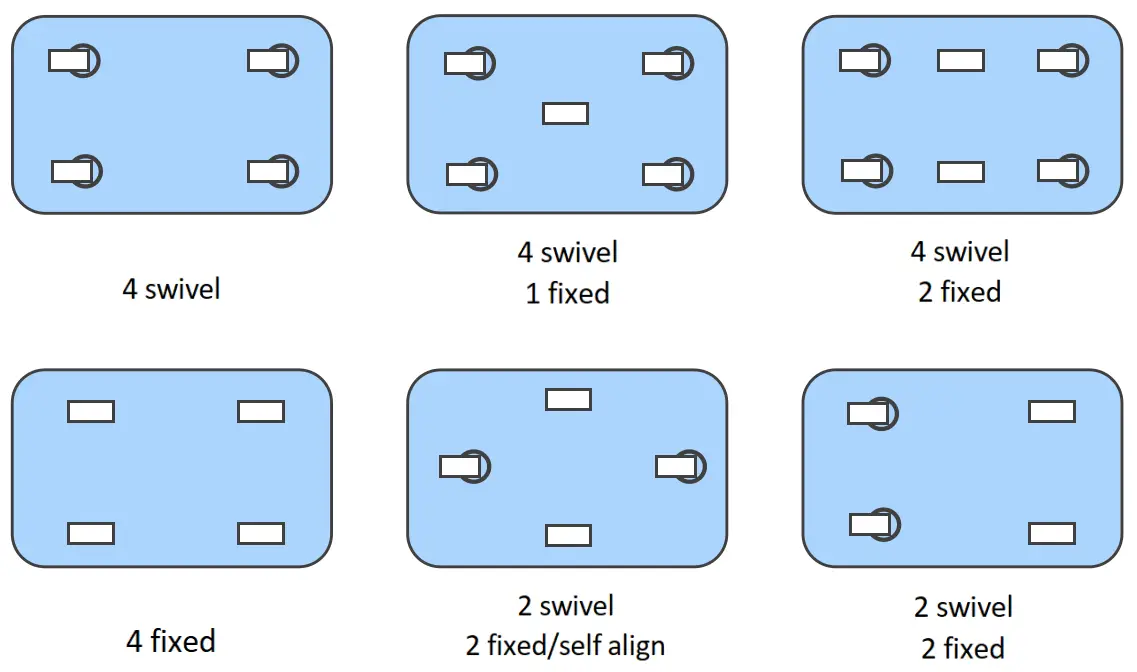
Once you've chosen your casters, you need to decide how to arrange them. This is called the caster pattern, and it has a massive effect on how your cart moves. Choosing the wrong pattern can make a cart almost impossible to control, especially with heavy loads. The most common arrangements use a mix of swivel casters (which rotate 360 degrees) and rigid casters (which are fixed in one direction). Think about how you need your equipment to move. Do you need to navigate tight corners, or do you need to move it in a straight line down a long hallway? The answer will tell you which pattern is best.
Standard Caster Patterns
| Pattern | Description | Best For |
|---|---|---|
| All Swivel | Four swivel casters. | Maximum maneuverability in tight spaces. Can be hard to steer in a straight line. |
| Standard | Two rigid casters at one end, two swivel casters at the other. | Good straight-line tracking and steering control. The most common pattern for carts. |
| Diamond | Two rigid casters in the center, one swivel at each end. | Turns on its own center point (zero-turn). Good for long, narrow carts. |
Conclusion
Choosing the right caster involves matching function, mounting, capacity, material, and pattern to your specific needs. Understanding these basics ensures you get a safe, durable, and efficient solution.
Learn to calculate the right load capacity to prevent equipment failure and ensure safety. ↩
Explore different wheel materials to solve issues like noise, floor marking, and wear, optimizing performance. ↩
Discover the benefits of PU wheels, known for high load capacity and wear resistance, ideal for various applications. ↩
Learn about Nylon wheels, offering high load capacity and low rolling resistance, suitable for heavy loads. ↩